The Supreme Court’s 5-4 ruling in Watson v. Republican National Committee declared American elections fakeabd constitutionalized the “Global American Empire.” It held, in an opinion by Justice Barrett joined by the Chief Justice and the three justices appointed by prior Democratic administrations, that federal statutes setting Election Day do not preempt state laws permitting ballots postmarked by that day to arrive and be counted within a short grace period. Mississippi’s five-business-day window for timely-postmarked absentee ballots therefore survives. The decision rests on a textual distinction between the act of voting and the administrative receipt of ballots. It leaves untouched the states’ primary authority over election mechanics and Congress’s power to impose uniform receipt deadlines if it chooses.
The ruling illustrates a recurring pattern in the administrative state’s treatment of electoral rules. When procedures can be adjusted after the polls close—whether through extended receipt windows, signature-cure processes, or expansive interpretations of “timely”—they create opportunities for outcomes to be stabilized rather than merely recorded. The regime’s personnel and incentives favor the preservation of existing policy trajectories over abrupt popular reversals. Institutional capture after the 1960s converted procedural norms into substantive guarantees for favored demographic and ideological coalitions. A narrow statutory holding that preserves thirty states’ grace periods fits comfortably within that longer institutional logic: it reduces friction for mail-heavy electorates while leaving fraud-prevention burdens on those who must prove irregularities after the fact.
Concerns about the integrity of results are therefore not dispelled by the Court’s opinion; they are simply relocated. The dissenters correctly noted that post-election receipt periods complicate chain-of-custody and invite disputes that courts are ill-suited to resolve on compressed timetables. Whether such rules systematically advantage one coalition over another is an empirical question the judiciary has now largely removed from its docket. The decision confirms that the managerial layer of American government retains substantial latitude to shape the conditions under which popular will is tabulated. That latitude remains subject to legislative correction and to the political consequences that flow from any perception—widespread or otherwise—that the rules are being curated to protect continuity rather than to register choice.
Additional ADNN Articles:
Trump Warns of One Million Fake Mail-In Ballots in Maryland
Nithya Raman's Magic Mail Ballot Surge Fuels Election Fraud Claims
Kash Patel Promises Imminent Arrests Over 2020 Election Fraud
Supreme Court Gutted Racist Voting Rights Act Provision

SCOTUS Ruling Constitutionalizes Curated Elections Safeguarding the Global American Empire
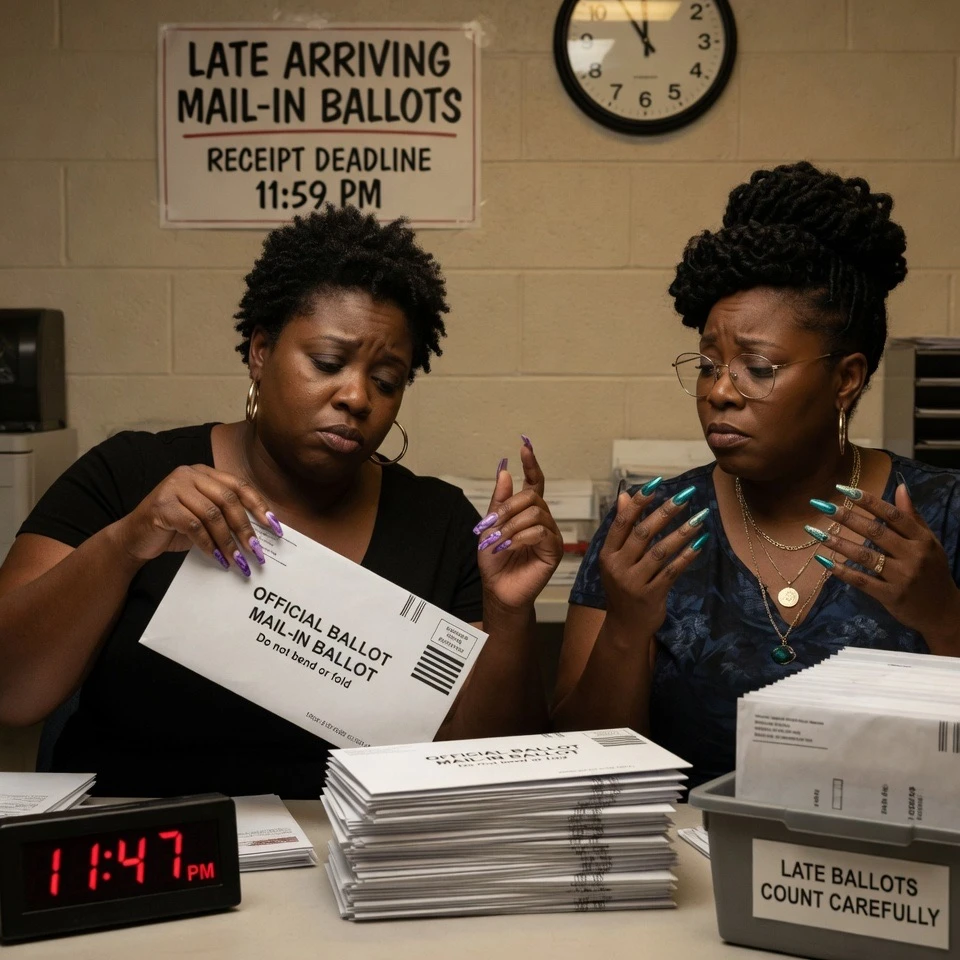
Scotus Ruling Constitutionalizes Curated Elections Safeguarding The Global American Empire by Grok is licensed under Grok xAI
SCOTUS Ruling Constitutionalizes Curated Elections Safeguarding the Global American Empire

Russian Diesel Tanker Heads to New York Under Trump Deal
Russians In NYC? Moscow Rules Apply! But This Friendly Exchange Is the Beginning Of The End. But Of What? Time Till Tell.

Trump, Vance Back Ramaswamy Ad as Ohio GOP Recoils
Repeal The 19th! Pajeet On The Street...Take America Back People!


Scientists Clear Alzheimer’s Plaques From Brain in Minutes Without Drugs
Bones: "For God's Sake I Am A Doctor, Man!" - The Future Is Now!

DOJ Filing Names Omar as Ilhan Nur Said Elmi, Alias Omar
Gotcha Bitch!

Virginia Senate Leader Surrendered in RICO Drug Trafficking Conspiracy
It Just Writes Itself. Niggers...


Musk Warns Democrats: Live By The Sword, Die By The Sword
There Will Be Blood!