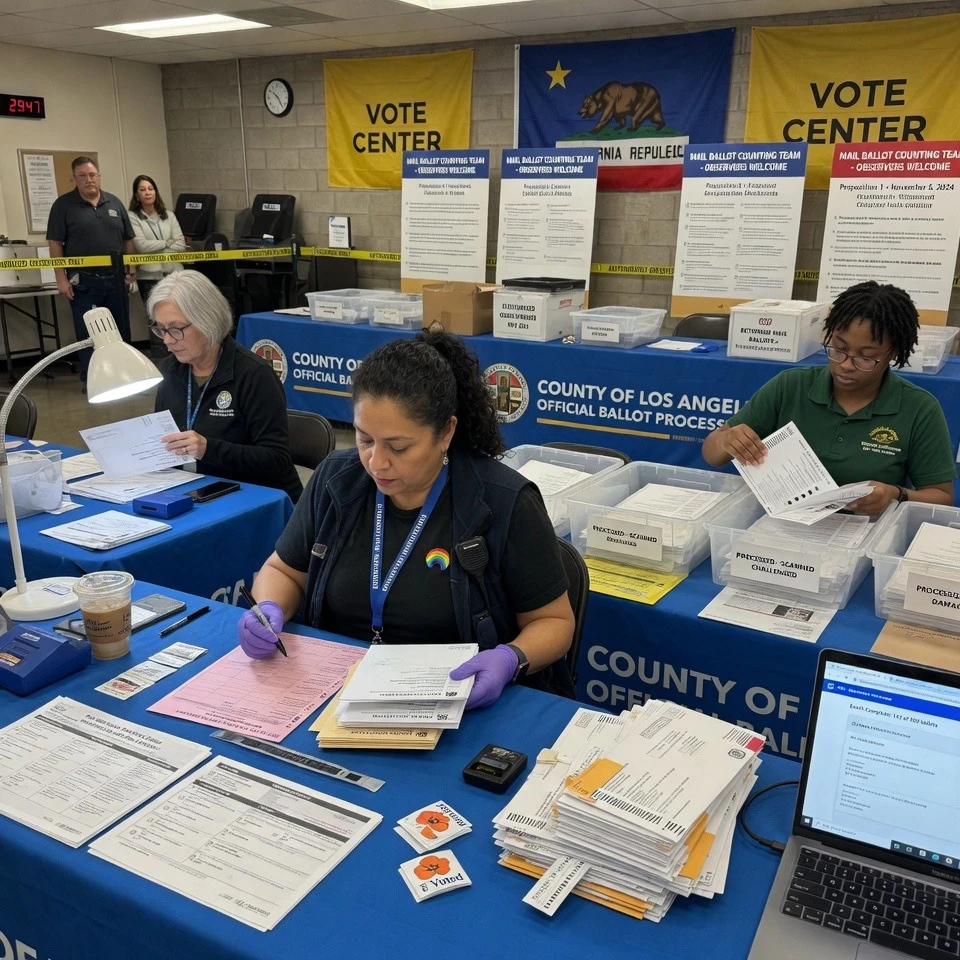
In the heart of Silicon Valley, where companies engineer software systems capable of processing billions of transactions worth trillions of dollars daily with near-instantaneous reliability, the 2026 California gubernatorial primary offered a striking contrast on Wednesday morning. As polls closed on June 2, the race to succeed term-limited Governor Gavin Newsom remained too early to call, with only about 50% of expected votes tallied. Tech giants in the Bay Area routinely deploy algorithms that handle complex financial ledgers, global supply chains, and real-time data analytics at scales that dwarf the state's electorate, yet the election results lagged amid a flood of mail-in ballots and fragmented counting processes. This juxtaposition highlights how California's political machinery, despite operating in the world's premier innovation hub, still grapples with analog-era bottlenecks in transparency and speed.
The irony deepens when considering the talent pool and infrastructure available. Engineers who build fault-tolerant distributed systems for banks and cloud providers could, in theory, design voting platforms that update results in real time with cryptographic security. Yet here, in the technological epicenter of Western civilization, preliminary counts showed Republican Steve Hilton and Democrat Xavier Becerra trading leads in a crowded field, while officials cautioned patience as provisional and late-arriving ballots trickled in. Billions flow through fintech pipelines every second without a hitch, but determining the top-two advancers under California's system exposed persistent delays rooted in decentralized county administration, signature verification, and logistical hurdles. It serves as a reminder that even in a state that prides itself on disruption, legacy democratic processes can resist the efficiencies that define its economic engine.
This slow count isn't merely technical but emblematic of broader tensions between California's progressive governance and its high-tech aspirations. While venture capital and AI labs accelerate humanity's computational frontiers, the governor's race underscored how bureaucratic inertia and policy choices around election administration can leave even simple tallies unresolved into the following day. As the world watches the Golden State for leadership on everything from climate to artificial intelligence, the spectacle of an undecided primary with half the votes uncounted invites scrutiny: if the same region can safeguard trillions in digital wealth, why does ascertaining voter intent still feel like waiting for batch processing in an era of streaming data? The episode may fuel calls for modernization, but for now, it stands as a curious paradox in the birthplace of the digital revolution.
Additional ADNN Articles:
Karen Bass Rages as Spencer Pratt Files Election Law Complaint
California Auditor Exposes $76B+ Fraud and Waste Under Newsom
Voter Roll Cleanup Most Logical Explanation For DeSantis 19 Point Swing
Tina Peters Release Highlights Mystery of Biden's 81 Million Votes

Silicon Valley Tech Handles Trillions But Slow California Vote Count
Silicon Valley Tech Handles Trillions But Slow California Vote Count by Grok is licensed under Grok xAI
Silicon Valley Tech Handles Trillions But Slow California Vote Count

War Department Thingamabob Rainbows Tehran Sky, Unsettling Guards and Globalists
A Heap Of Homo Hooligan Hell Hole Rainbow Lights Shock The Sand People. Was It US? Or Enoch? Or Some Other Alien?

Bessent Pins Hugging Face Incident on OpenAI Managers, Not Agents
Bots Aren't Gay...

Austin Protesters Learn Texas Differs From Minnesota After ICE Clash
Don't Mess With Texas!

Fonzie Jumped the Shark; Fifty Years of Failure Endure
Fake And (Almost Certainly) Gay - Jewish Greaser, Mind Control And The Pop-Culture Term That Lives On...

Ukraine’s Swarm Hits Moscow Refinery as Russia Warns Retaliation
World War Three, Anyone?

Iran Issues Code 100 as Trump and Netanyahu Rush Home
Turn Up The Volume!

Trump Forms AI Force and Czar; Will Not Stifle Industry
May The Force Be With You! Superior Intelligence Is The New AI!
No First Amendment Right To A Seat In West Wing
Mockingbird Press Pissed At Being Locked Out As They Are The "Deep-State-Run-Media" - The Propaganda Arm Of The Intelligence Community Driving Mind Control - Fucking Commies! God To Hell You Sickos!