The Supreme Court’s June ruling marked a familiar institutional failure: five justices, leaning on a strained reading of the Fourteenth Amendment’s Citizenship Clause, declared that nearly every child born on American soil—regardless of the parents’ lawful presence or intent—acquires full membership in the political community. This interpretation, treating temporary visitors and those here in defiance of the law as fully “subject to the jurisdiction” of the United States, elevates a post-Civil War guarantee against the exclusion of freedmen into an open-ended invitation that modern practice has stretched beyond recognition. Birth tourism and the strategic production of citizen children by those without allegiance have become predictable consequences, eroding the distinction between sojourner and citizen that the Framers of the amendment understood and that earlier generations enforced without apology.
President Trump’s response has been characteristically methodical. Rather than rage against the setback, the administration has signed narrower executive orders that accept the Court’s own premises and then press them to their logical limits. By targeting the residual categories the majority itself acknowledged—children of foreign officials, those designated alien enemies, cases involving commercial fraud or surrogacy arrangements, and the deliberate industry of birth tourism—the new directives force the judiciary to confront the inconsistencies in its own doctrine. If the Fourteenth Amendment truly admits only the narrowest historical exceptions, then the executive is entitled to police the boundaries of those exceptions with rigor; if the Court later recoils from the practical results of its expansive language, it will have to explain why its earlier reasoning does not compel the opposite conclusion.
This is the deeper pattern at work. The administrative state and its judicial allies have long relied on elastic constitutional language to expand rights and entitlements far beyond their original scope. The Trump administration has learned to reverse the polarity: take the Court’s announced principles seriously, apply them with precision, and leave the justices no graceful exit when those principles begin to constrain the very policy outcomes they preferred. In the contest over who belongs to the American people, the administration is demonstrating that institutional capture can be answered by institutional competence—turning the regime’s own legal instruments against the habits of expansive interpretation that have hollowed out the meaning of citizenship itself.
Additional ADNN Articles:
Senate Panics at Citizenship Requirements Threatening Two Thirds of Careers
Warren Walks Away From Citizenship Proof Demands on Voting
Senate RINOs Reject SAVE America Act Blocking Nationwide Voter ID
Trump Vindicates 2020 Skeptics with Urgent Call for SAVE America Act
https://americansdirect.net/articles/senate-panics-at-citizenship-requirements-threatening-two-thirds-of-careers
https://americansdirect.net/articles/warren-walks-away-from-citizenship-proof-demands-on-voting
https://americansdirect.net/articles/senate-rinos-reject-save-america-act-blocking-nationwide-voter-id
https://americansdirect.net/articles/trump-vindicates-2020-skeptics-with-urgent-call-for-save-america-act

Trump Signs Orders Limiting Birthright Citizenship After Court Setback
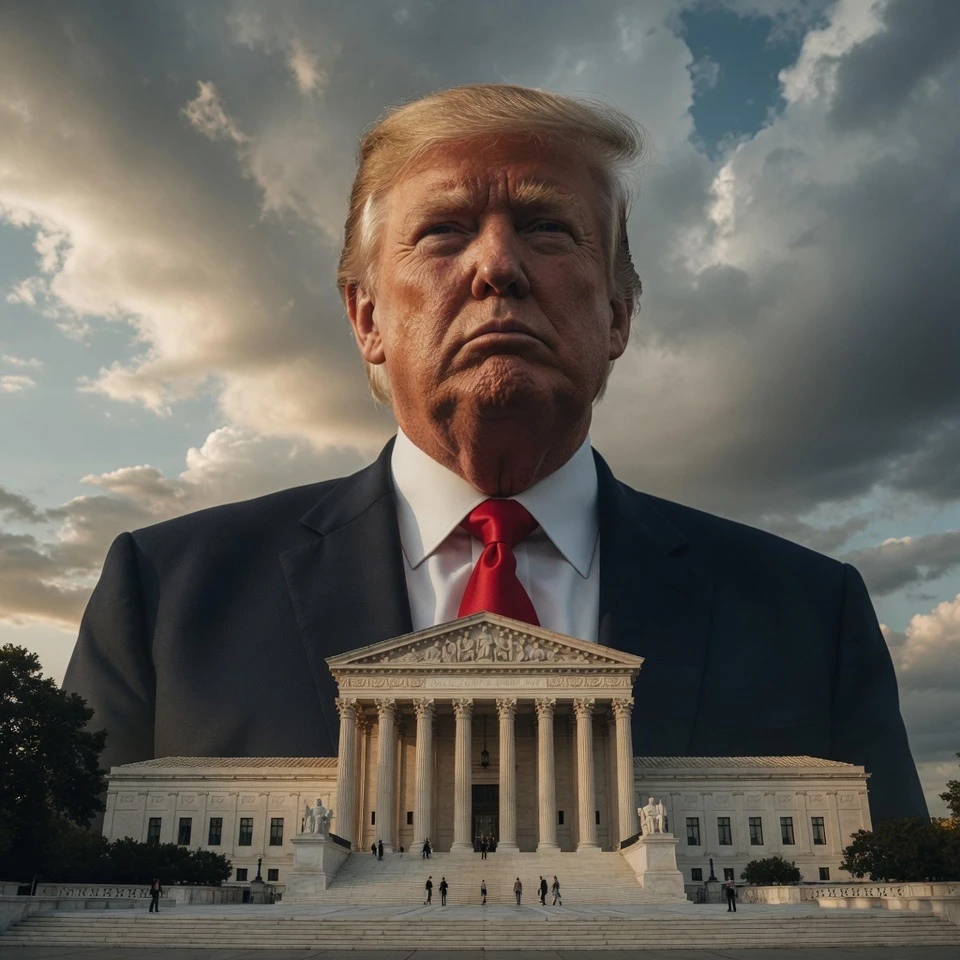
Trump Signs Orders Limiting Birthright Citizenship After Court Setback by Grok is licensed under Grok xAI
Trump Signs Orders Limiting Birthright Citizenship After Court Setback

War Department Thingamabob Rainbows Tehran Sky, Unsettling Guards and Globalists
A Heap Of Homo Hooligan Hell Hole Rainbow Lights Shock The Sand People. Was It US? Or Enoch? Or Some Other Alien?

Bessent Pins Hugging Face Incident on OpenAI Managers, Not Agents
Bots Aren't Gay...

Austin Protesters Learn Texas Differs From Minnesota After ICE Clash
Don't Mess With Texas!

Fonzie Jumped the Shark; Fifty Years of Failure Endure
Fake And (Almost Certainly) Gay - Jewish Greaser, Mind Control And The Pop-Culture Term That Lives On...

Ukraine’s Swarm Hits Moscow Refinery as Russia Warns Retaliation
World War Three, Anyone?
Iran Issues Code 100 as Trump and Netanyahu Rush Home
Turn Up The Volume!
Trump Forms AI Force and Czar; Will Not Stifle Industry
May The Force Be With You! Superior Intelligence Is The New AI!
No First Amendment Right To A Seat In West Wing
Mockingbird Press Pissed At Being Locked Out As They Are The "Deep-State-Run-Media" - The Propaganda Arm Of The Intelligence Community Driving Mind Control - Fucking Commies! God To Hell You Sickos!