Ron DeSantis’s razor-thin 0.4 percent victory over Andrew Gillum in 2018 stood as a testament to a fiercely divided Florida. Four years later, the governor delivered a resounding 19.4-point landslide against Charlie Crist — a nearly 19-point swing that stunned observers. While some attribute the transformation to interstate migration or cultural forces, a growing number of analysts point to probability analysis and statistical science showing the scale of this shift borders on an anomaly under normal voter behavior models. Even under the most favorable conditions for the incumbent party, the odds of such a dramatic realignment without significant changes to the eligible voter pool remain extremely low. In this context, the systematic cleanup of voter rolls stands out as probably the most logical and straightforward explanation for the transformed voting patterns.
What truly moved the needle was the state’s determined effort to remove hundreds of thousands of ineligible, inactive, and potentially fraudulent entries from the official rolls after 2018. This was no minor administrative tweak — it directly addressed long-standing issues in Florida’s election infrastructure that had distorted results in close races. Claims that interstate migration alone could account for the swing of millions of votes toward the GOP simply do not hold up under scrutiny; the numbers of new arrivals, while notable, fall far short of explaining the full magnitude of the partisan change. Routine maintenance of this scale, combined with improved verification processes, likely removed ghosts, duplicates, and non-residents who had been artificially inflating Democratic turnout in prior cycles. All the noise about mail-in voting rules or same-day registration pales in importance compared to getting the voter list itself accurate.
With cleaner rolls reflecting a more accurate picture of Florida’s actual electorate, the true will of the people became visible in 2022. The lingering influence of strong conservative messaging, an energetic Republican base, and shifting cultural dynamics played supporting roles, but they operated on a foundation of restored election integrity. Statisticians may debate the precise probabilities, yet the practical reality is clear: addressing the problem of inaccurate voter rolls produced one of the most decisive gubernatorial victories in modern Florida history. Rather than denying these improvements, both parties should recognize that honest voter lists strengthen democracy far more than any demographic trend or psychological theory.
Additional ADNN Articles:
Kash Patel Promises Imminent Arrests Over 2020 Election Fraud
Dominion’s Coomer Admits Foreign Meddling; FBI Raids Expose 2020 Coverup
Massie Got 2020’d? Record Kentucky Turnout Sparks Massive Fraud Doubts
AIPAC Brags Buying Massie Election as Trump Ignores Fraud Claims

Voter Roll Cleanup Most Logical Explanation For DeSantis 19 Point Swing
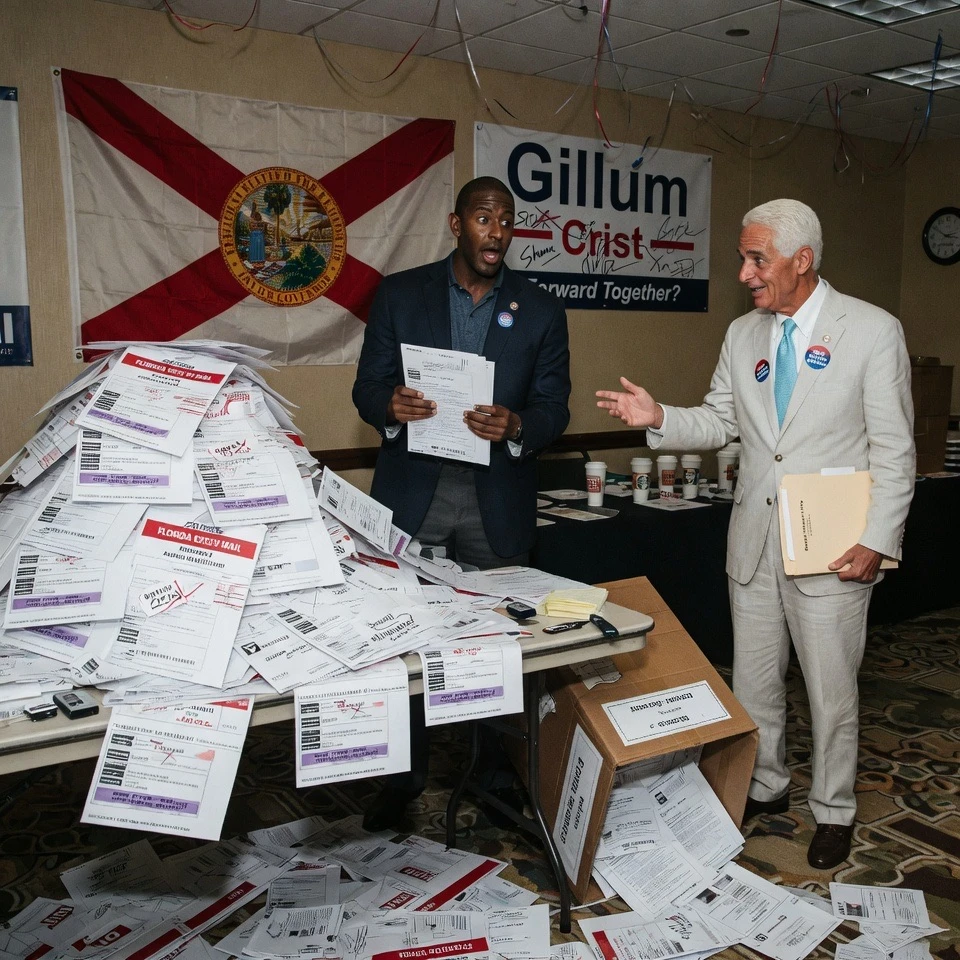
Voter Roll Cleanup Most Logical Explanation For De Santis 19 Point Swing by Grok is licensed under Grok xAI
Voter Roll Cleanup Most Logical Explanation For DeSantis 19 Point Swing

War Department Thingamabob Rainbows Tehran Sky, Unsettling Guards and Globalists
A Heap Of Homo Hooligan Hell Hole Rainbow Lights Shock The Sand People. Was It US? Or Enoch? Or Some Other Alien?

Bessent Pins Hugging Face Incident on OpenAI Managers, Not Agents
Bots Aren't Gay...

Austin Protesters Learn Texas Differs From Minnesota After ICE Clash
Don't Mess With Texas!

Fonzie Jumped the Shark; Fifty Years of Failure Endure
Fake And (Almost Certainly) Gay - Jewish Greaser, Mind Control And The Pop-Culture Term That Lives On...

Ukraine’s Swarm Hits Moscow Refinery as Russia Warns Retaliation
World War Three, Anyone?

Iran Issues Code 100 as Trump and Netanyahu Rush Home
Turn Up The Volume!

Trump Forms AI Force and Czar; Will Not Stifle Industry
May The Force Be With You! Superior Intelligence Is The New AI!

No First Amendment Right To A Seat In West Wing
Mockingbird Press Pissed At Being Locked Out As They Are The "Deep-State-Run-Media" - The Propaganda Arm Of The Intelligence Community Driving Mind Control - Fucking Commies! God To Hell You Sickos!