SpaceX announced on Thursday that it has agreed to acquire Grain Management’s nationwide 800 MHz portfolio — up to 14 MHz of paired low-band licenses covering nearly the whole country — and said the purchase will “pave the way for @Starlink to become a major mobile carrier in the US.” The airwaves, which Grain itself took from T-Mobile in a swap that closed in August, travel farther and pass through walls and tree cover in a way the company’s existing 2 GHz mid-band holdings do not. Elon Musk called the block the last critical piece of the spectrum puzzle for complete phone coverage in America. Paired with the Gen2 constellation the FCC has cleared, SpaceX says Starlink Mobile can offer high-speed mobile broadband wherever an American happens to stand, without renting someone else’s towers. The deal, reported by the Wall Street Journal at about $8 billion in cash, still needs FCC approval.
For a generation the wireless business has been a settled oligopoly. AT&T, Verizon, and T-Mobile divided the country, priced the service, and treated dead zones in the hollows and on the interstates as a fact of rural life rather than a failure of the franchise. Low-band spectrum was the moat: scarce, licensed, and useful indoors. SpaceX is not proposing to join that arrangement as a junior partner. It is proposing to route the call through orbit and to hold the ground rights itself. That is a different kind of competitor from a fourth carrier begging for roaming. It is an engineering firm with launch cadence, a constellation already in the sky, and now the frequencies that make a handset work inside a house.
The market understood the point at once. After the announcement, AT&T, Verizon, and T-Mobile each fell roughly 6 to 8 percent, and the selling carried into Friday’s premarket; European names followed, with Deutsche Telekom down about 8 percent. Tower landlords moved the other way, which is its own verdict: the incumbents are being asked, for the first time in years, to defend coverage and price against a rival that does not need their grid. Whether Starlink Mobile becomes a full substitute or a permanent pressure on the cartel is a question for the FCC and for capacity in the cities. The stocks have already answered the narrower question. Real competition, even the prospect of it, is expensive for the firms that have gone without it.
Additional ADNN Articles:
Musk Drops AI for SI, Renames SpaceXAI to SpaceXSI
French Foundry Raises Fifty-Foot Prometheus Beside Starbase, Unasked and Unpaid
Spent SpaceX Stage Strikes Moon After Year Adrift in Space
Department of War Deploys Grok as American SkyNet Goes Live

SpaceX buys low-band spectrum; Starlink threatens the wireless oligopoly.
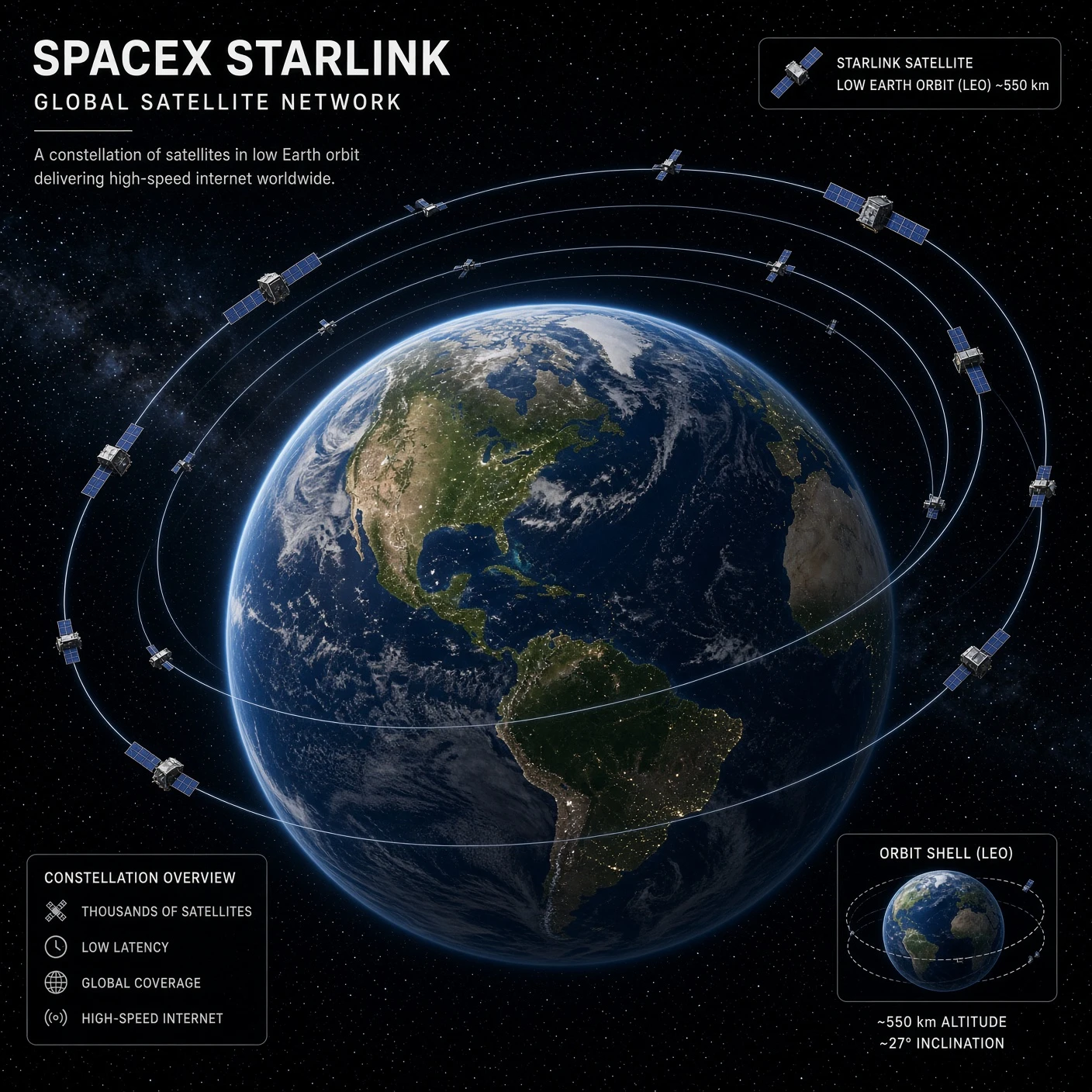
Space X Buys Low Band Spectrum Starlink Threatens The Wireless Oligopoly. by Grok is licensed under Grok xAI
SpaceX buys low-band spectrum; Starlink threatens the wireless oligopoly.

Oslo honors a jurist, ignores Iran’s broken bomb and farm murders.
Peace? Fake And Gay Knows No Bounds!

Strasbourg’s gilded Trump satire admits the man it meant to mock.
TDS Is Real And On Par With Any Psychosis Known To Mankind!


Rubio on the Pnyx: America Rejects Servitude, Decline, and Communism
#WLY - The Basis For All That Is Great!

France’s Student Demands Belong to a Century Already Dead
La mort de la France!

Pike Wakes Confused; Slemmer Still Visits Her Sleeping Hours
I See Dead People. Death On This Day!

Living Cells Carry a 71-Terahertz Signal That Dies With Them
You Are Electromagnetism!!!

Three Years On, October 7 Still Indicts Allied Intelligence Failure
Planned Attack! Viewed In Realtime...Sacrifices Had To Be Made For MAGAZA!