A chemical tank at the GKN Aerospace facility in Garden Grove, Orange County, California, has been overheating and venting toxic vapors since around May 21-22, 2026, creating an ongoing hazardous materials crisis. The tank holds approximately 7,000 gallons of methyl methacrylate, a highly volatile, flammable chemical used in manufacturing plastics and resins for aerospace parts. Officials report the tank has bulged under pressure, with internal temperatures rising despite continuous cooling efforts by firefighters using water sprays and other methods. A potential crack has been observed, which might relieve pressure but also raises risks of a significant spill or explosion that could ignite nearby tanks and release a toxic plume.
The situation poses severe dangers to surrounding communities in densely populated Southern California, prompting mandatory evacuations for tens of thousands of residents across Garden Grove and parts of Cypress, Stanton, Anaheim, Buena Park, and Westminster. California Governor Gavin Newsom declared a state of emergency, mobilizing state resources and opening shelters as the incident disrupts daily life ahead of the Memorial Day weekend. Health officials warn of potential respiratory irritation, eye burning, nausea, and other effects from vapor exposure, while an explosion could lead to a fireball, widespread contamination, or environmental damage reaching storm drains and waterways. Emergency crews continue working around the clock, but no clear timeline exists for when evacuees can safely return home.
Questions persist about how this incident occurred at a regulated aerospace manufacturing site, with speculation ranging from possible industrial terrorism and government oversight failures to interpretations of divine judgment on California’s societal issues. Investigations are underway into maintenance practices, equipment integrity, and compliance at the facility, but no confirmed evidence of foul play has emerged. Others point to broader regulatory or infrastructural shortcomings in high-risk industrial zones near residential areas, while some residents frame it through a moral or religious lens amid the state’s ongoing challenges. Authorities emphasize that the priority remains containment, public safety, and thorough post-incident review to prevent future risks.
Additional ADNN Articles:
California Auditor Exposes $76B+ Fraud and Waste Under Newsom
Mexican Mafia Dozens Arrested in California Amid Iranian Conflict Focus
San Diego Sunshine Makes Mosque Shooting a Totally Whacky Idea
Trump Warns Frey: Playing with Fire on Immigration Enforcement

Toxic Chemical Tank Fire Forces Mass Evacuations Across Southern California
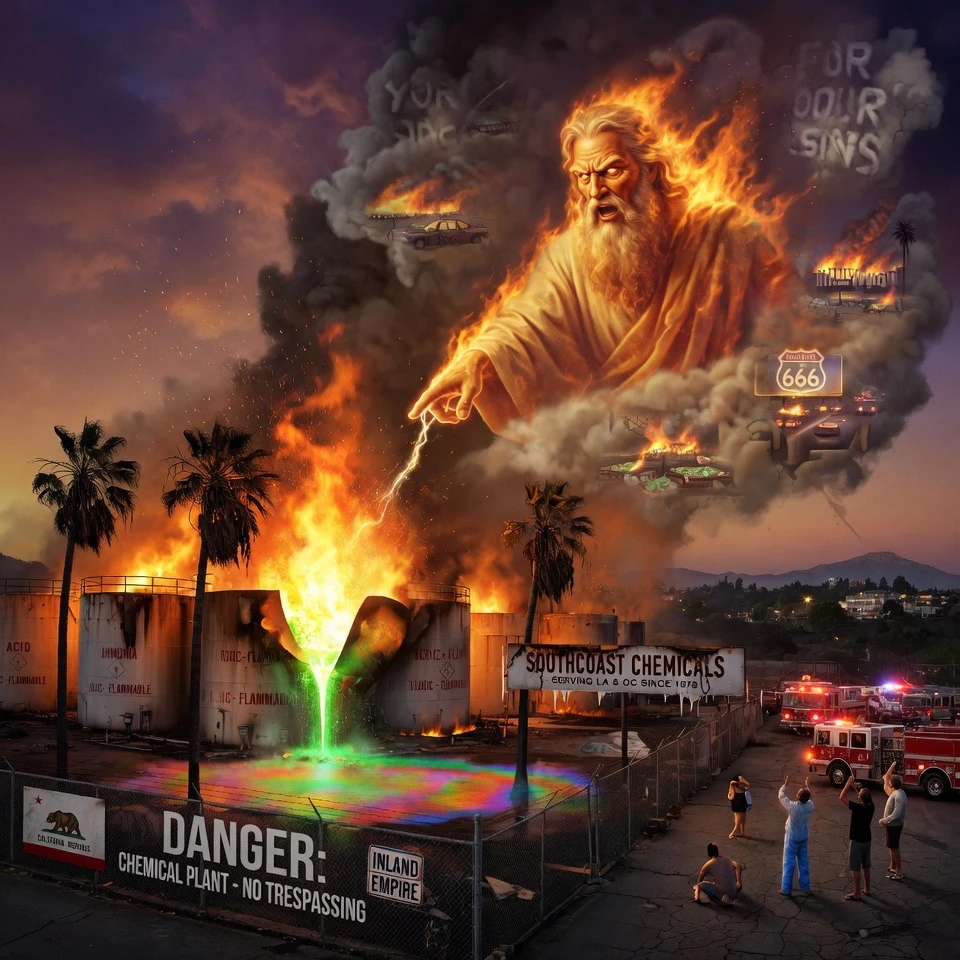
Toxic Chemical Tank Fire Forces Mass Evacuations Across Southern California by Grok is licensed under Grok xAI
Toxic Chemical Tank Fire Forces Mass Evacuations Across Southern California

War Department Thingamabob Rainbows Tehran Sky, Unsettling Guards and Globalists
A Heap Of Homo Hooligan Hell Hole Rainbow Lights Shock The Sand People. Was It US? Or Enoch? Or Some Other Alien?

Bessent Pins Hugging Face Incident on OpenAI Managers, Not Agents
Bots Aren't Gay...

Austin Protesters Learn Texas Differs From Minnesota After ICE Clash
Don't Mess With Texas!

Fonzie Jumped the Shark; Fifty Years of Failure Endure
Fake And (Almost Certainly) Gay - Jewish Greaser, Mind Control And The Pop-Culture Term That Lives On...

Ukraine’s Swarm Hits Moscow Refinery as Russia Warns Retaliation
World War Three, Anyone?

Iran Issues Code 100 as Trump and Netanyahu Rush Home
Turn Up The Volume!

Trump Forms AI Force and Czar; Will Not Stifle Industry
May The Force Be With You! Superior Intelligence Is The New AI!
No First Amendment Right To A Seat In West Wing
Mockingbird Press Pissed At Being Locked Out As They Are The "Deep-State-Run-Media" - The Propaganda Arm Of The Intelligence Community Driving Mind Control - Fucking Commies! God To Hell You Sickos!