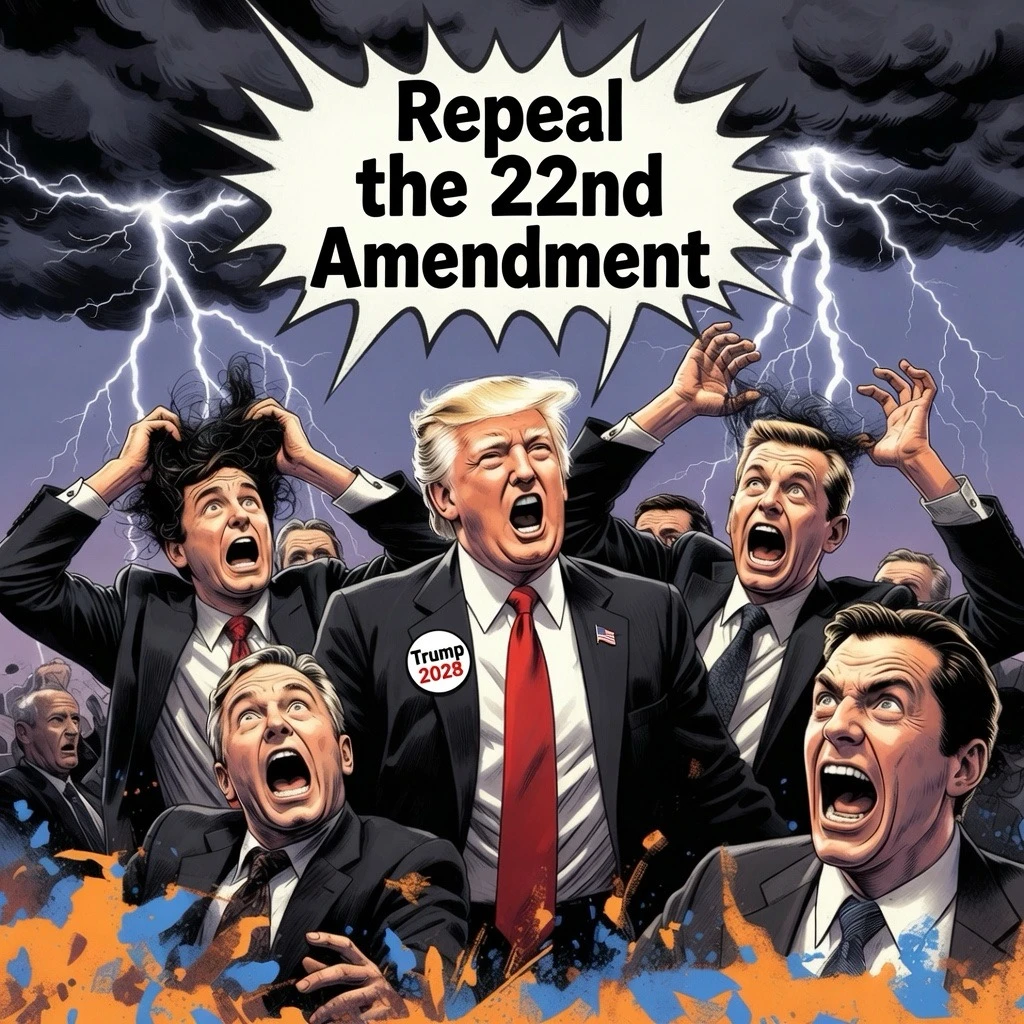
President Trump’s latest Truth Social barrage—more than forty AI-generated images released in a single Sunday afternoon—has once again exposed the brittle nerves of the Democratic Party and its media auxiliaries. The sequence mixed the fantastical with the pointed: Trump standing beside George Washington in a time-travel tableau that suggested continuity of founding purpose, sharp visual jabs at late-night hosts and progressive grandees, and vivid scenes of American forces prevailing over Iranian assets, complete with the Stars and Stripes planted upon seized tankers. What unsettles the opposition is not merely the imagery’s theatrical flair, but the underlying premise that the 2028 contest remains open territory. The posts treat the two-term limit not as an iron law of the republic but as a provisional arrangement subject to democratic reconsideration.
The 22nd Amendment, ratified in the aftermath of Franklin Roosevelt’s four elections, was sold as a safeguard against monarchical ambition. In practice it has proven a porous barrier whenever dynastic or “kingly” claims have enjoyed popular support. Roosevelt himself demonstrated that sustained public confidence can override formal constraints; later figures on both sides of the aisle have tested its edges through proxies, family succession, and endless speculation. Trump’s AI campaign simply makes the speculation visible and, for many voters, attractive. The Democratic freak-out reveals less constitutional piety than fear that the electorate might again prefer competence and resolve over the revolving door of institutional mediocrity.
Should the public mood harden in favor of continuity, the amendment’s repeal would require only the ordinary constitutional process—supermajorities in Congress and the states. That process is deliberately arduous, yet history shows it yields when the alternative appears worse. Trump’s images do not invent the possibility; they merely illustrate what a confident majority already senses: that the republic’s durability rests less on parchment prohibitions than on the character of those who lead it and the willingness of citizens to judge results rather than calendar entries.
Additional ADNn Articles:
Trump's Unfiltered Correspondents Speech Roasts Press and Claims Fourth Term
GOP Pride Holds at 90 Percent as Democrats Plummet Post-Trump
Leavitt Exposes Democrats’ Violent Rhetoric Leading to Trump Assassination Attempt
Susan Rice Warns: Democrats Promise Retribution Against Trump-Aligned Corporations

Trump Floods Truth Social with 2028 AI Images Defying Limits
Trump Floods Truth Social with 2028 AI Images Defying Limits
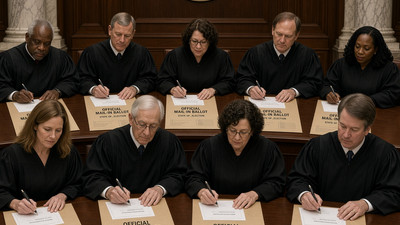
Court Blocks Mail Ballot Screens as Midterm Ballots Fly Unchecked
Elections Are Fake And Gay!

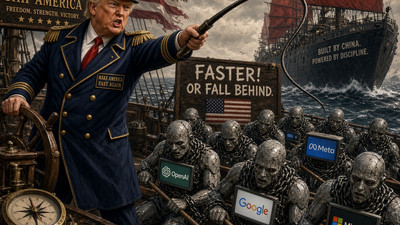
Trump Calls AI Apocalypse a Hoax, Heralds Golden Age Ahead
Calling Bullshit On The Nerds! And No More Global Resets!

EPA Withdraws Biden Carbon Rules That Forced Plants To Close
Clean Air & Clean Water...Clean House On Everything Else!



Palantir’s Twenty-Two Points: Hard Power for the Machine Age
Hubris? Or Humility? Humming Away Won't Solve It. Time To Pay The Piper! The Future Is Now!