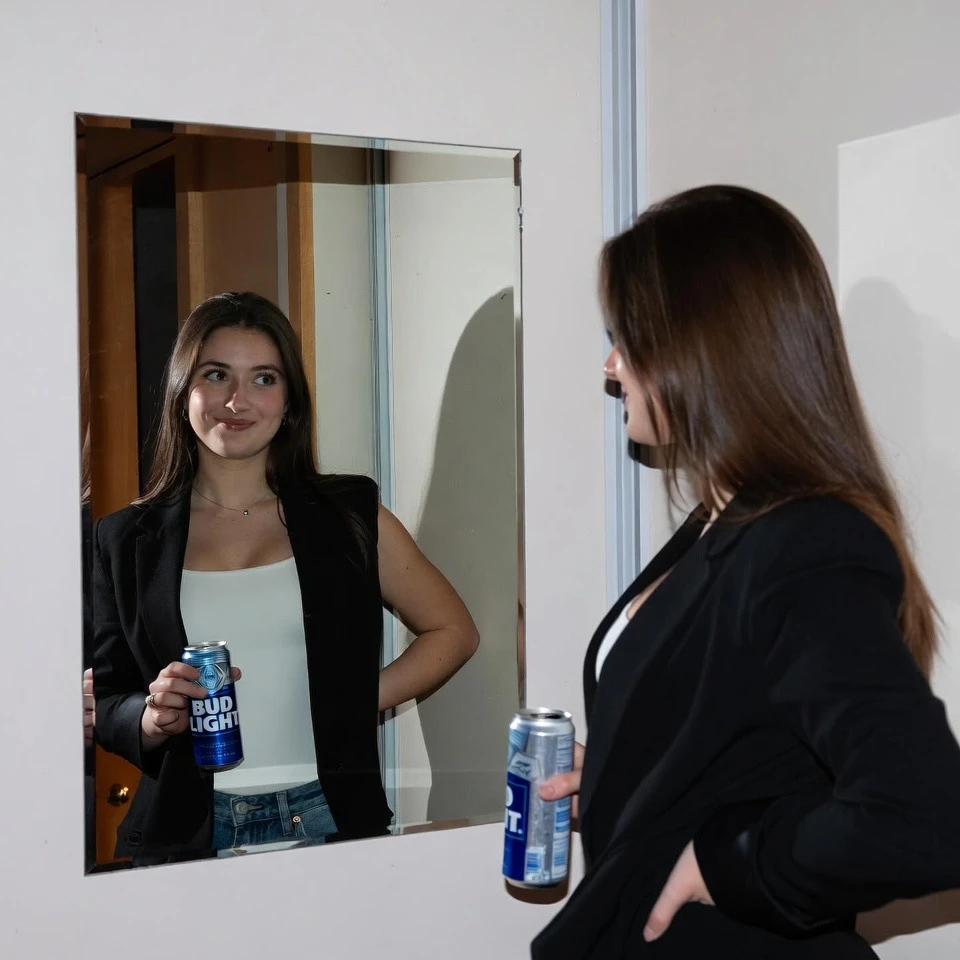
The speculation over a supposed resemblance between CNN’s Kaitlan Collins and the transgender influencer Dylan Mulvaney did not arise from some spontaneous outbreak of online mischief. It sprang, fully formed, from a single pointed remark by President Trump at the rescheduled White House Correspondents’ Dinner. In the midst of his roast, the President observed that he had briefly mistaken Collins for the face on a certain notorious Bud Light can, only to realize the image belonged to Mulvaney. The line was delivered with the practiced economy of a man who understands that a well-placed comparison can do more damage than a lengthy indictment. Within hours the observation escaped the ballroom and began circulating as meme, screenshot, and side-by-side photograph across every major platform.
What followed was the familiar cascade of our digital age. Progressive commentators denounced the comparison as bigotry; conservative accounts treated it as confirmation of an open secret about media aesthetics and the costs of corporate virtue-signaling. The images proliferated, the debate widened, and the original joke was soon secondary to the larger quarrel over gender presentation, corporate marketing failures, and the press’s own thin skin. International outlets picked up the story not because the resemblance itself was of geopolitical consequence, but because Trump’s willingness to state the obvious still retains the power to unsettle polite consensus. A single sentence had once again demonstrated that certain cultural taboos remain brittle.
The episode reveals more about the present moment than about either of the individuals involved. When a president can, with one aside, convert a three-year-old advertising catastrophe into a global talking point, the underlying tensions—over authenticity, beauty standards, and institutional credibility—are already near the surface. Trump merely applied pressure. The subsequent saturation of social media was less a manufactured frenzy than the inevitable release of pressures that the political and media class had preferred to keep contained. In that sense the joke performed its true function: it forced into public view a conversation that polite society had insisted must never occur.
Additional ADNN Articles:
Qween Jean First Transgender Tony Winner at Pink Hosted Spectacle
Obama’s Brutalist Library Photo Ignites Shocking Memes and Defamatory X Firestorm
Trump’s ‘WE GOT HIM!’ Iran Pilot Rescue Triumphs Over Haters
Trump: Ultimate Christian Warrior, Non-Churchgoer Battles Liberals, Mocks Fake News

Trump Joke Ignites Global Frenzy Over Collins Mulvaney Likeness
Trump Joke Ignites Global Frenzy Over Collins Mulvaney Likeness

War Department Thingamabob Rainbows Tehran Sky, Unsettling Guards and Globalists
A Heap Of Homo Hooligan Hell Hole Rainbow Lights Shock The Sand People. Was It US? Or Enoch? Or Some Other Alien?

Bessent Pins Hugging Face Incident on OpenAI Managers, Not Agents
Bots Aren't Gay...

Austin Protesters Learn Texas Differs From Minnesota After ICE Clash
Don't Mess With Texas!

Fonzie Jumped the Shark; Fifty Years of Failure Endure
Fake And (Almost Certainly) Gay - Jewish Greaser, Mind Control And The Pop-Culture Term That Lives On...

Ukraine’s Swarm Hits Moscow Refinery as Russia Warns Retaliation
World War Three, Anyone?
Iran Issues Code 100 as Trump and Netanyahu Rush Home
Turn Up The Volume!

Trump Forms AI Force and Czar; Will Not Stifle Industry
May The Force Be With You! Superior Intelligence Is The New AI!
No First Amendment Right To A Seat In West Wing
Mockingbird Press Pissed At Being Locked Out As They Are The "Deep-State-Run-Media" - The Propaganda Arm Of The Intelligence Community Driving Mind Control - Fucking Commies! God To Hell You Sickos!