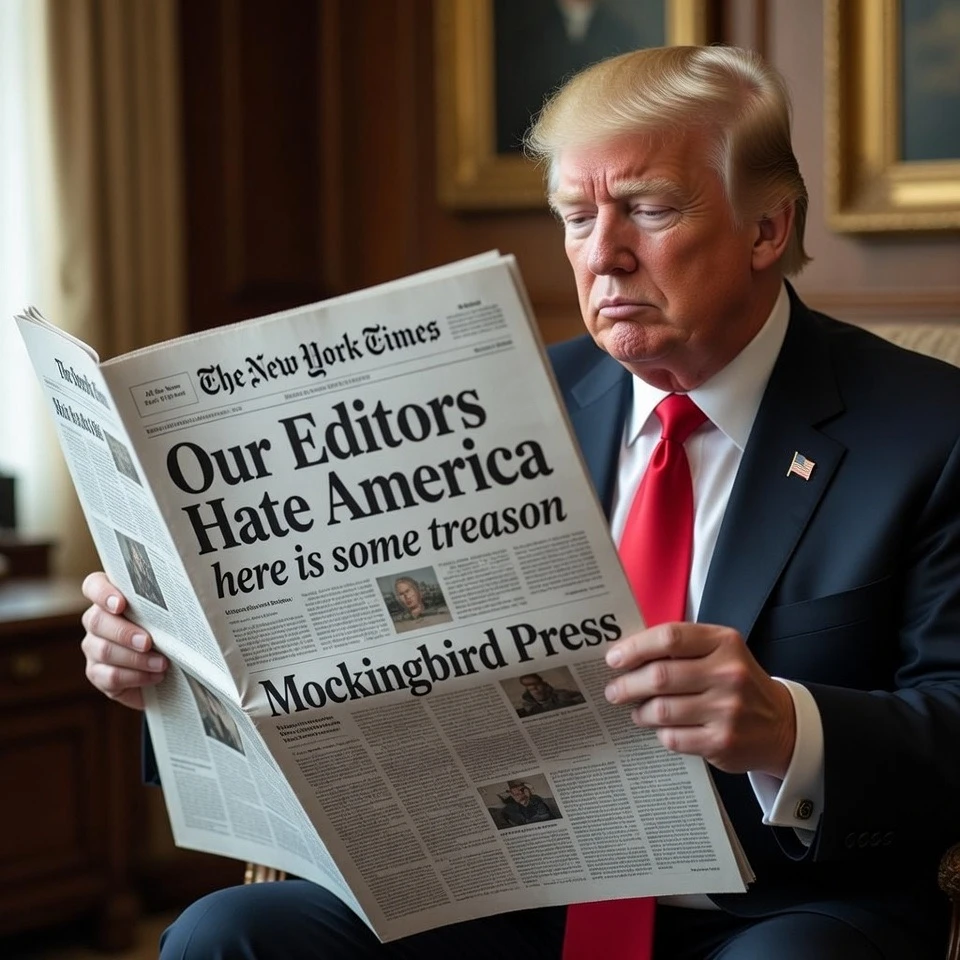
President Trump escalated his criticism of the New York Times in mid-May during a heated Air Force One exchange with reporter David Sanger. He called the paper’s Iran conflict coverage “treasonous,” arguing that it deliberately downplayed a decisive U.S. military victory that had crippled Iran’s navy, air force, and other capabilities while the Strait of Hormuz remained open. Trump framed the reporting as part of a pattern where outlets like the Times and CNN refused to acknowledge success and instead pushed narratives that undermined American achievements. The language was classic Trump—rhetorically explosive and aimed at legacy media he has long viewed as adversarial.
This clash ties directly into Trump’s ongoing $15 billion defamation lawsuit against the New York Times. The suit, originally filed and later amended in 2025 over election-cycle coverage and a related book, centers on allegations of reputational and business harm from what Trump calls false reporting.30 Developments around the Iran reporting are being positioned as additional grounds that could expand the case, with public statements and social media activity suggesting the president wants to hold the paper accountable for what he sees as a continuing pattern of misleading the public on foreign policy.16 Whether courts will treat interpretive disputes over military outcomes as defamation—especially under the high “actual malice” bar for public figures—remains the central legal question. Media organizations counter that such coverage reflects legitimate journalistic scrutiny of complex, evolving conflicts rather than malice.
Rumors that DNI Tulsi Gabbard may declassify materials illuminating modern intelligence-media dynamics (sometimes labeled “Mockingbird 2.0”) add an intriguing layer of speculation. Gabbard has already released documents on other intelligence controversies, and any fresh disclosures about historical or ongoing influence channels between agencies and outlets could fuel broader arguments about narrative coordination.24 However, turning rumors or even actual declassifications into a winning legal strategy would require specific, admissible evidence that the Times’ Iran reporting crossed from protected speech or good-faith analysis into provable defamation—not just that media ecosystems have biases or past ties. In practice, these cases often hinge more on verifiable facts and legal standards than on grand declassifications alone. The court of public opinion moves faster than the actual courts.
Additional ADNN Articles:
Trump Flips Doomed IRS Lawsuit Into Sweeping Tax Shield Victory
Judge Gayles Cannot Permanently Block Trump’s WSJ Epstein Suit.
JPMorgan Admits Closing 50+ Trump Accounts Post-Jan 6, Sparking $5B Lawsuit
Dominion’s Coomer Admits Foreign Meddling; FBI Raids Expose 2020 Coverup

Trump Slams NYT Treasonous Iran Lies in Billion-Dollar Lawsuit
Trump Slams NYT Treasonous Iran Lies in Billion-Dollar Lawsuit

Farmer’s Call Forces Rearrest of Five Over Fairford Plot
Arrest Them All!

You Built Pattern Recognition. What Did You Expect Would Happen?
Racism Is Real...Not Artificial.

USC Celebrates Illegal Hit on Top Prospect Dante Moore
Gridiron Games...
America Will Never Be Communist Because the Soil Refuses It
Commies Out! Better Dead Than Red!

Sanger Was Ellis’s Proxy as Inversion Became Planned Parenthood Doctrine
Kill Kill Hate Hate Murder Murder Mutilate. These Sickos Have Done Real Damage!