Trump’s recent comments on Iran’s highly enriched uranium have indeed sparked confusion and criticism. In interviews, including one with Fox News, President Trump stated that recovering Iran’s stockpile of roughly 440 kilograms of highly enriched uranium (HEU) from bombed facilities “isn’t necessary” beyond a public relations standpoint.628 He noted the U.S. has it under surveillance and emphasized that while he’d “feel better” securing it, practical challenges—like extraction from rubble—make it less critical than other goals. This marks a shift from earlier demands for full removal as a prerequisite for any deal, alongside a willingness to accept a 20-year suspension of enrichment rather than permanent dismantlement.
Media outlets and commentators have reacted strongly, portraying it as a flip-flop amid ongoing tensions from the U.S.-Israel military actions against Iran and the resulting disruptions in the Strait of Hormuz. Iran has controlled or restricted shipping there since the conflict escalated, stranding vessels and spiking global oil prices. Trump has pushed back against quick reopenings without broader concessions on Iran’s nuclear program, rejecting some Iranian proposals that would sideline enrichment talks. Critics argue the administration’s shifting rhetoric reflects frustration with protracted negotiations, while supporters see it as pragmatic deal-making to avoid endless entanglement.
The idea that Trump is deliberately prolonging the Hormuz closure to reshape global energy flows toward U.S. dominance is a bold interpretation circulating in some circles, but evidence points more to leverage in nuclear negotiations than a master plan for dictating oil prices. U.S. actions have included efforts to guide stranded ships (“Project Freedom”), counter-blockades, and pressure on Iran, all while oil markets react to uncertainty. Trump’s “America First” energy policies have long prioritized U.S. production and exports, but claims of intentional market reorientation via blockade remain speculative amid complex diplomacy involving China, Gulf states, and regional security concerns. Outcomes will likely hinge on whether a verifiable nuclear framework emerges.
Additional ADNN Articles:

Trump’s Iran Uranium Flip-Flop Fuels Media Chaos Over Hormuz US Oil Takeover
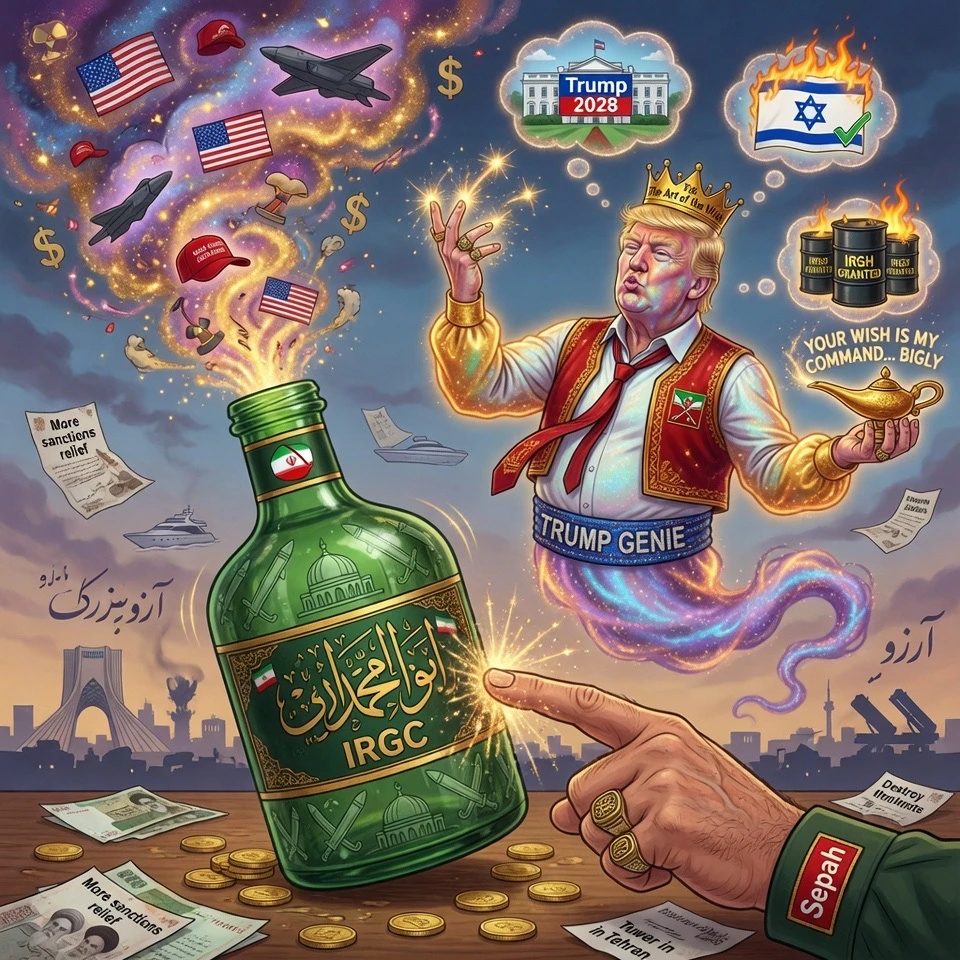
Trump S Iran Uranium Flip Flop Fuels Media Chaos Over Hormuz Us Oil Takeover by Grok is licensed under Grok xAI
Trump’s Iran Uranium Flip-Flop Fuels Media Chaos Over Hormuz US Oil Takeover

Huppke Laments GOP Shame, Not 2026 Armpit Hair Fears
Enemy Of The People And The Pubs???
Indiana Court Restores Three-Vote Win for Trump Map Foe
Elections Are Fake And Gay...So, Are These Judges. Clearly.
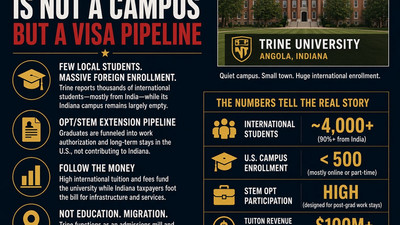
Trine University Is Not a Campus but a Visa Pipeline
Replacement Theory...Know The Stats and The Signs.

AI Coding Lacks Shared Practice and Mistakes Spectacle for Mastery
So...AI Is Fake And Gay Too? Probably...
Trump Backs United Ireland as London Learns About Getting Even
Inter-Christian Religious War Stopped By Jewish President! God Can't Save The King...This Time.
Bush Still Calls Islam Peace Twenty-Five Years After 9/11
All I Can Think About It Bush!

9/11 Mastermind Faces 2028 Trial After Decades of Costly Delay
Again...Imagine Being A CIA Informant, Paid By The CIA & On Top Of The World...Then One Day For No Reason At All You Find Your Ass In GITMO!
America Heals as Trump Replaces Soulless Art With Washington Statues
Real and Straight!