Americans across the heartland find themselves asking, with growing exasperation, just what manner of conflict this has become. On Sunday, Ukraine unleashed hundreds of drones deep into Russian territory, one of Kyiv’s most ambitious aerial campaigns of the entire war, claiming at least six lives and setting warehouses and homes ablaze near Moscow and in the Rostov region. The scale alone—Russian defenses claiming more than eight hundred intercepts—ought to give pause. Yet the larger question is not the tactical ingenuity of remote warfare; it is how a distant European border dispute has been allowed to metastasize into an open-ended contest that consumes American attention, resources, and strategic bandwidth without any clear terminal objective.
Drone warfare is a peculiar form of hell: impersonal, relentless, and increasingly unbound by the old constraints of geography or manpower. Machines fly for hours, guided by algorithms and operators hundreds of miles away, delivering destruction with a detachment that once belonged only to science fiction. No serious American constituency ever sought to arm or prolong a proxy struggle against Russia on Ukrainian soil. The original impulse was containment and deterrence, not the slow-motion attrition of a continental power through endless deliveries of munitions and intelligence. Yet the institutional machinery of NATO, once a defensive alliance, has settled into a four-year rhythm of escalation that shows no sign of fatigue.
What began as a response to invasion has hardened into a permanent feature of the security architecture, with each new Ukrainian long-range strike and each Russian reprisal locking the parties more tightly into a logic of reciprocal devastation. The result is a conflict that grows more destructive precisely because neither side can afford to appear to lose, while the American public is left to watch the spectacle and wonder how their republic became the silent underwriter of a war without end. The longer this pattern continues, the more it reveals the gap between the original, limited purposes of alliance and the open-ended commitments that now define it.
Additional ADNN Articles:
Ukrainian Drones Strike Deep as War’s Lessons Demand Ending
Zelensky Offers Crimea to Russia to Prevent World War Three
Trump Confronts Competing War Pressures from Zelensky and Netanyahu
Patriot Senator Graham Falls After Ukraine Drone Factory Mission

Americans Wonder as Ukraine Unleashes Hundreds of Drones Across Russia
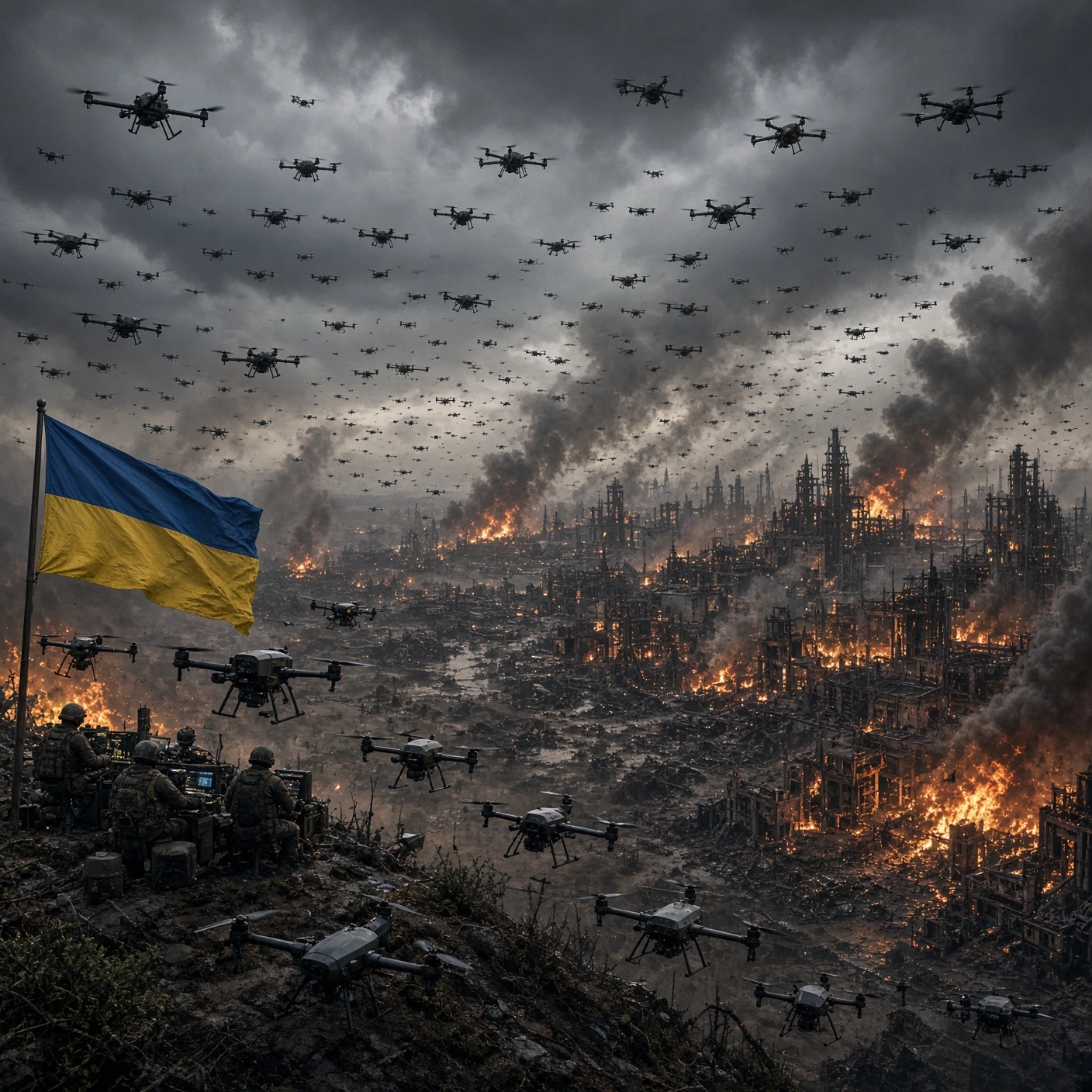
Americans Wonder As Ukraine Unleashes Hundreds Of Drones Across Russia by Grok is licensed under Grok xAI
Americans Wonder as Ukraine Unleashes Hundreds of Drones Across Russia

Liberal Women Cheer El-Sayed’s Win and the Control They Reject
If They Can't Repeal The 19th...Then Remove ALL Muslims! Must Go!

Trump Vows Hormuz Strait Will Become United States Territory
Time Will Tell...But At This Point Anything Is Possible.

Bessent: Mass Deportations Raise Wages and Lower Rents for Americans
We Want You! To Go Home! Now!

Catholic Scholars Elect Jewish Critic to Head Biblical Association
In It Together...In Case You Were Wondering...


Federal Stalking Plea Blocks Mangione from Becoming Woke Folk Hero
And Just Like That..."not with a bang but a whimper."