The Air Force’s Cloud One, that ambitious multi-vendor cloud hub stood up in 2017 to knit together personnel records, logistics, and tactical data across more than two hundred sites, has now been breached at the control plane itself. Attackers exploited a software flaw and reached the layer that functions, in the words of one source, like a universal remote: the place from which an intruder can, in principle, survey the status of aircraft or the movement of spare parts. The platform rests on the commercial stacks of Microsoft, Amazon, Oracle, and Alphabet. Discovery during a routine upgrade has already frozen migrations and blocked patching, leaving the service that underpins North American air-defense feeds and global munitions tracking in a state of enforced paralysis.
This is no isolated mishap. It arrives amid a sequence of disruptions and intrusions that have touched the NSA’s classified internal network, an unclassified system used by the CIA and the Office of the Director of National Intelligence, elements of the FBI and the Treasury, and assorted corporate and departmental networks. Some of the outages appear to have been self-inflicted by the very patches meant to close newly discovered vulnerabilities; others were external. The pattern is clear enough: the digital infrastructure that the American state and its contractors have outsourced to a handful of large technology firms is repeatedly proving less robust than the rhetoric of “cloud modernization” has claimed.
What is at stake is not merely another cybersecurity incident but the quiet erosion of sovereign control over the instruments of power. When the control plane of a major military cloud can be reached through a software flaw, the republic has outsourced a core function of defense to entities whose commercial incentives and architectural choices were never designed for wartime continuity. The same elite consensus that treated globalized supply chains and open-source software as costless efficiencies now confronts the bill. Competence in the elementary task of securing the platforms that move men, materiel, and targeting data is not a secondary concern; it is the prerequisite for any serious claim to great-power status. The present string of failures suggests that claim is being tested more by negligence at home than by any single adversary abroad.
Additional ADNN Articles:
North Korean Operators Drain Six Billion From Binance in Hours
Black October: Forty-Eight Hours of Systemic Cyber Collapse Across Every Sector
NSA Director Haugh Learns The Meaning Of FAFO
Domestic Agencies Orchestrate Systemic Outages for Deep State Reckoning

Attackers Breach Air Force Cloud Control Plane Amid Agency Disruptions
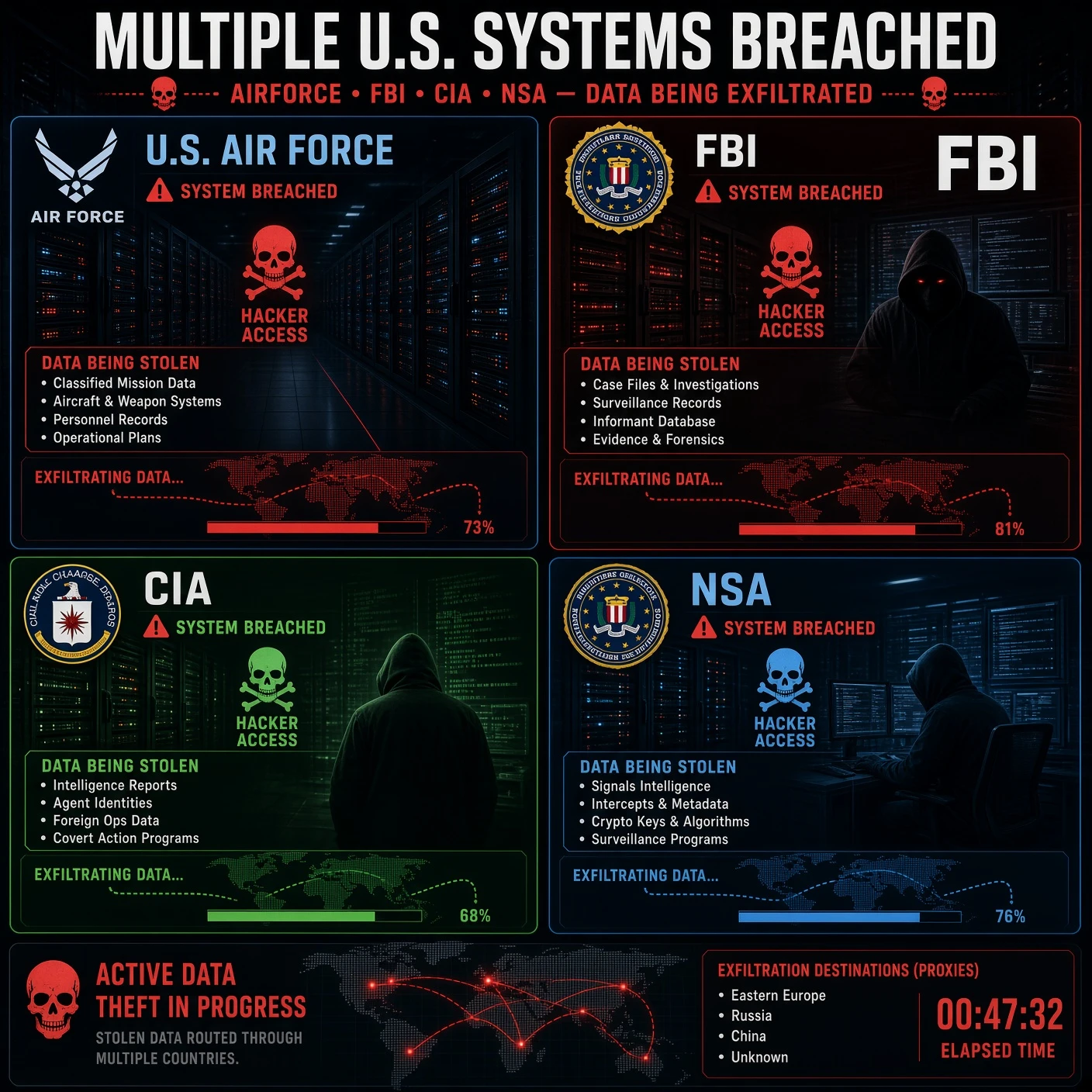
Attackers Breach Air Force Cloud Control Plane Amid Agency Disruptions by Grok is licensed under Grok xAI
|
Attackers Breach Air Force Cloud Control Plane Amid Agency Disruptions

Trump Thanksgiving Post Exposes GDP Sabotage and Deep State Resistance
Pilgrim's Post! The Boss Is In Charge!
Trump Releases 248 USAID Files Exposing Tech Disinformation and Billions in Aid
Deep State Is In Deep Shit!

NFL Thanksgiving Games End in Historic Final-Second Scores Mirroring Odds
NFL = Nigger Faggot League Or Numbers Fake League...But It Sure Is Entertaining! Bread And Circus!

Trump Tariffs Force China Vietnam India Toward Immediate Trade Deals
Art Of The Deal...Asia Pacific Style.


Steelers Cut Rodgers After Interview Nukes McCarthy And Liberal Rooneys
The Truth Teller - Being A Dragon Slayer Is Lonely Business! Burn It Down!

Macy’s Centennial Parade Postponed First Time in Its History
Talk About Letting The Air Out Of The Balloon!

Vicious Fight Over Huang Signals Rise of Sovereign Full Stack
Dear Jensen, You can’t eat your cake and have it too. - Love, Ted