President Trump’s Thanksgiving missive on Truth Social was less a greeting than a reminder that the permanent bureaucracy still treats elections as an opportunity rather than a constraint. While American families gathered around tables, the president extended holiday wishes to “those who issued fake Economic Numbers, just prior to the Election, and corrected them yesterday, three weeks late, showing that the GDP was actually 4.3%, versus 3.4%.” He called the discrepancy a “RECORD SETTING ERROR” requiring immediate investigation. The Bureau of Economic Analysis had released its advance estimate of 3.4 percent growth for the third quarter on October 29—days before the midterms—then revised the figure upward by nearly a full point on November 25, attributing the change primarily to stronger investment and consumer spending. The timing, not the mechanics of revision, is what the president flagged: an understated number circulating in the final stretch of a campaign, corrected only after the votes were cast.
That pattern is familiar to anyone who has watched the administrative state manage politically inconvenient data. Routine statistical updates are not conspiracies in themselves, yet the consistent direction of the error—downward pressure on the growth narrative until after the election—fits a longer history of institutional self-preservation. Christopher Caldwell has written of the way postwar administrative structures acquired their own interests, distinct from those of elected officials or the public that elects them. Michael Anton has described the same phenomenon as a managerial elite that treats democratic outcomes as problems to be managed rather than mandates to be executed. In this case the revision arrived not as a quiet technical correction but as a post-election acknowledgment that the economy under the Trump administration had been stronger than the pre-election figures suggested. The president’s pointed Thanksgiving address treated the episode not as statistical noise but as continued sabotage by elements of the deep state that remain hostile to the administration’s agenda.
The larger point of the post was that prosperity and political will are still contested territory. Trump paired the economic correction with warnings about efforts to import Sharia norms into American courts, redistribute private wealth to those who do not work, and sustain large immigrant populations that he described as largely dependent on public assistance. Whether one accepts every characterization, the underlying observation is that the same administrative apparatus capable of releasing and then quietly revising GDP figures is also the apparatus that administers immigration enforcement, benefits programs, and regulatory policy. The holiday message was therefore less a break from tradition than a continuation of it: the president using a national occasion to insist that the real condition of the country—economic and political—will not be defined by institutions that have repeatedly demonstrated a preference for managing rather than executing the results of elections.
Additional ADNN Articles:
Macy’s Centennial Parade Postponed First Time in Its History
Trump Vows Mass Deportation: Ends Welfare, Reverses Third-World Invasion
Trump Shares Never Quit Message in Pre-Dawn Truth Social Posts
Trump’s Christmas Eve Post: Merry Wishes to Friends and Enemies

Trump Thanksgiving Post Exposes GDP Sabotage and Deep State Resistance
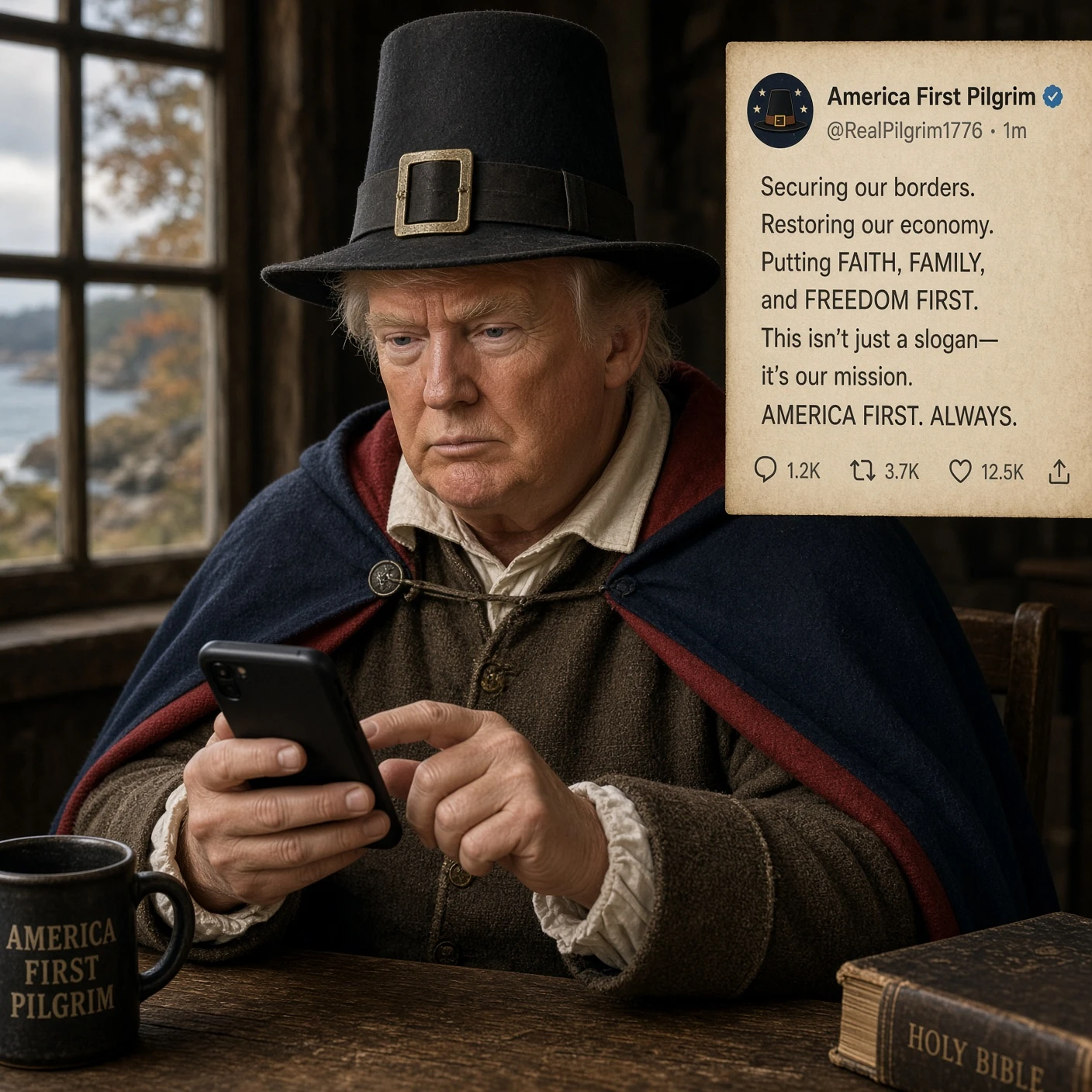
Trump Thanksgiving Post Exposes Gdp Sabotage And Deep State Resistance by Grok is licensed under Grok xAI
|
Trump Thanksgiving Post Exposes GDP Sabotage and Deep State Resistance
Trump Releases 248 USAID Files Exposing Tech Disinformation and Billions in Aid
Deep State Is In Deep Shit!

Attackers Breach Air Force Cloud Control Plane Amid Agency Disruptions
Spy War Ongoing...White Hats Vs. Black Hats!
NFL Thanksgiving Games End in Historic Final-Second Scores Mirroring Odds
NFL = Nigger Faggot League Or Numbers Fake League...But It Sure Is Entertaining! Bread And Circus!
Trump Tariffs Force China Vietnam India Toward Immediate Trade Deals
Art Of The Deal...Asia Pacific Style.


Steelers Cut Rodgers After Interview Nukes McCarthy And Liberal Rooneys
The Truth Teller - Being A Dragon Slayer Is Lonely Business! Burn It Down!

Macy’s Centennial Parade Postponed First Time in Its History
Talk About Letting The Air Out Of The Balloon!

Vicious Fight Over Huang Signals Rise of Sovereign Full Stack
Dear Jensen, You can’t eat your cake and have it too. - Love, Ted