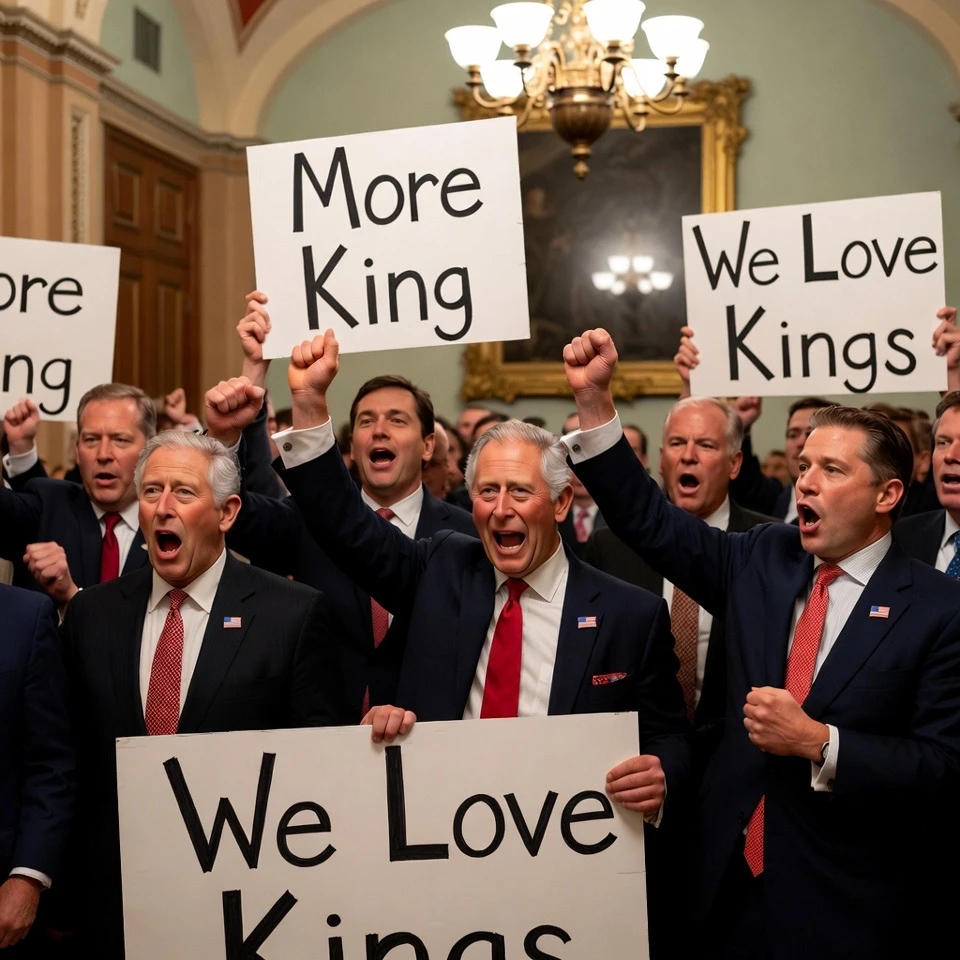
In the spring of 2026, Democratic leaders and their aligned organizations poured immense political capital and financial resources into orchestrating the “No Kings” protests, a sprawling series of rallies held across more than 3,300 locations that drew an estimated eight million participants on March 28 alone. Framed as a righteous stand against authoritarianism under the second Trump administration, these events were heavily promoted by progressive groups, labor unions, and Democratic operatives who warned that executive power had grown dangerously unchecked. Billions in organizing dollars, celebrity endorsements, and media amplification were deployed to paint the sitting president as a would-be monarch trampling democratic norms. Yet just one month later, on April 28, many of the very same lawmakers who had marched or spoken at those protests rose in unison to deliver multiple standing ovations to the literal King of England as he addressed a joint session of Congress. The optics were impossible to ignore: the same voices decrying “kings” at home greeted an actual hereditary sovereign with enthusiastic applause and reverence.
The contradiction cuts to the heart of a deeper partisan truth. The modern Democratic Party, self-styled heirs to Camelot’s glamour, MLK’s moral clarity, Zbigniew Brzeziński’s strategic realism, and the cult-like devotion once reserved for “Her Highness” and “The One,” has never truly opposed kingship as a concept. It opposes only kings who refuse to wear the correct team jersey. When the monarch in question is a polished British royal delivering polished remarks on alliances and climate, Democrats cheer. When the executive wielding power happens to be the outsider they spent years demonizing, suddenly every check and balance becomes an existential crisis. The “No Kings” slogan was never about abstract principle; it was a branded rallying cry aimed squarely at one man whose election they could not accept. The applause for King Charles III laid bare the selective outrage: ceremonial royalty from across the Atlantic is harmless pageantry, but an American president who governs without their permission is an intolerable threat to the republic.
This episode reveals more about the party’s psychology than any policy debate ever could. Democrats do not hate kings—they hate the idea that the current occupant of the White House is not theirs to command. Their political might and millions in protest funding were never invested in a consistent defense of republican virtue; those resources were mobilized to delegitimize an administration that refuses to bow to the progressive aristocracy. The standing ovation for a real monarch, delivered with smiles and bipartisan pageantry, served as an accidental confession. In the end, the “No Kings” movement was less about preserving democracy than about reclaiming the throne for their own preferred sovereign. The American people watched the spectacle unfold and drew the only logical conclusion: for one major party, the problem has never been kings—it has always been whose king sits on the throne.
Additional ADNN Articles:

Democrats Fund No Kings Protests Then Ovate Literal King
Democrats Fund No Kings Protests Then Ovate Literal King

War Department Thingamabob Rainbows Tehran Sky, Unsettling Guards and Globalists
A Heap Of Homo Hooligan Hell Hole Rainbow Lights Shock The Sand People. Was It US? Or Enoch? Or Some Other Alien?

Bessent Pins Hugging Face Incident on OpenAI Managers, Not Agents
Bots Aren't Gay...

Austin Protesters Learn Texas Differs From Minnesota After ICE Clash
Don't Mess With Texas!

Fonzie Jumped the Shark; Fifty Years of Failure Endure
Fake And (Almost Certainly) Gay - Jewish Greaser, Mind Control And The Pop-Culture Term That Lives On...

Ukraine’s Swarm Hits Moscow Refinery as Russia Warns Retaliation
World War Three, Anyone?

Iran Issues Code 100 as Trump and Netanyahu Rush Home
Turn Up The Volume!

Trump Forms AI Force and Czar; Will Not Stifle Industry
May The Force Be With You! Superior Intelligence Is The New AI!

No First Amendment Right To A Seat In West Wing
Mockingbird Press Pissed At Being Locked Out As They Are The "Deep-State-Run-Media" - The Propaganda Arm Of The Intelligence Community Driving Mind Control - Fucking Commies! God To Hell You Sickos!