During King Charles III’s White House visit, President Trump and First Lady Melania Trump led the royal couple directly to the newly expanded beehives on the South Lawn. Melania had recently unveiled a striking addition: a hive meticulously crafted in the shape of the White House itself, now home to thriving colonies. What began as a cordial diplomatic tour took on deeper resonance when a live bee landed calmly on Trump’s open palm. The King and Queen watched in visible surprise as the insect rested there peacefully, undisturbed. This was no mere photo opportunity. It unfolded as a deliberate, symbolic gesture rich with historical and cultural weight.
In ancient British and Scottish traditions—particularly among royal and rural families—one must formally “tell the bees” of major household changes, whether a death, marriage, or shift in mastery. Neglecting the ritual risks the hive abandoning its keepers. When Queen Elizabeth II passed in 2022, the royal beekeeper observed the custom at Buckingham Palace and Clarence House, announcing, “The Queen is dead. Long live the King.” Trump, sharing distant Scottish Stuart lineage with the royals, publicly showcased America’s thriving hives to the monarch. In this esoteric lens, the moment served as a modern telling of the bees for the post-Elizabeth era: a symbolic alignment of the two nations’ “hives” under fresh stewardship, bridging old-world tradition with new-world vitality.
The imagery resonated far beyond protocol. Trump stood tall and at ease as the undisputed figure in charge on American soil, while the King observed quietly. The bees—and through viral images, the watching world—bore witness to a subtle yet potent handover. It wasn’t confrontation but quiet assertion: the American hive flourishing independently, yet extending a hand of continuity and respect. In blending diplomacy, folklore, and spectacle, the encounter reminded observers that symbols still carry power, signaling stability, renewal, and who truly holds the hive in this evolving chapter of transatlantic relations.
Additional ADNN Articles:

Trump Tells the Bees: Symbolic Handover to King Charles at White House
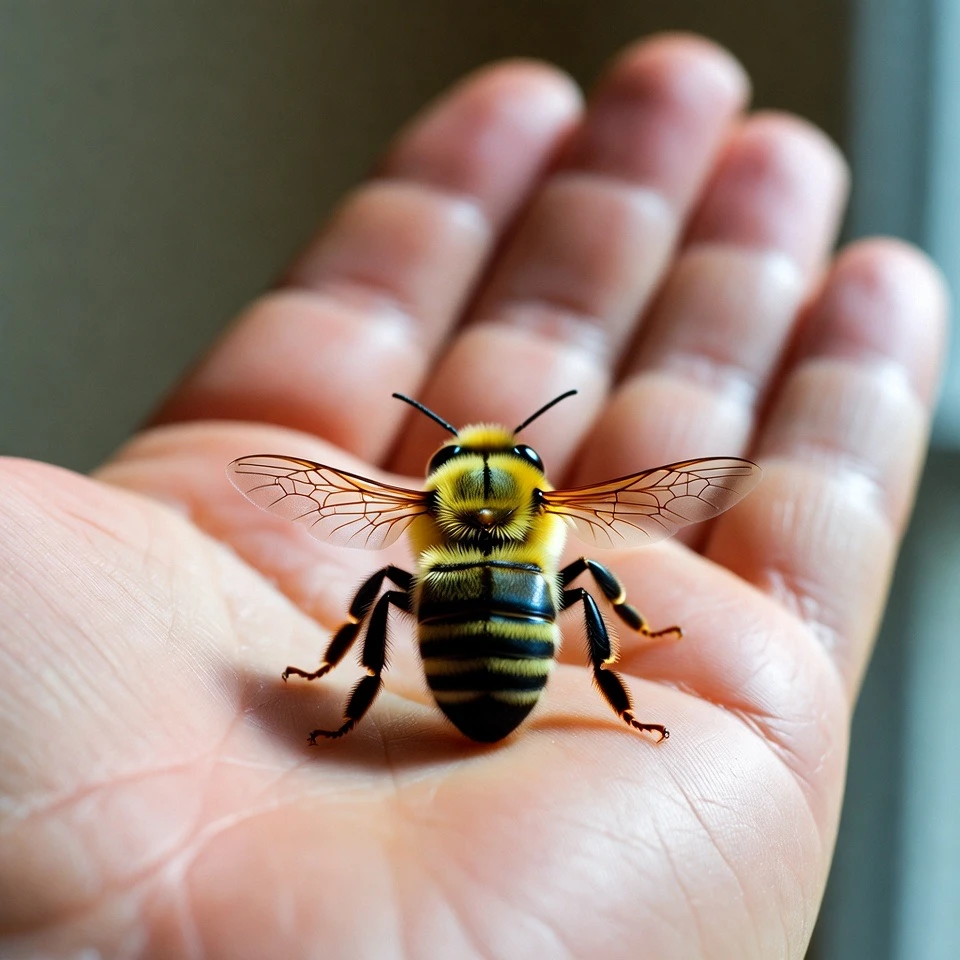
Trump Tells The Bees Symbolic Handover To King Charles At White House by Grok is licensed under Grok xAI
Trump Tells the Bees: Symbolic Handover to King Charles at White House

War Department Thingamabob Rainbows Tehran Sky, Unsettling Guards and Globalists
A Heap Of Homo Hooligan Hell Hole Rainbow Lights Shock The Sand People. Was It US? Or Enoch? Or Some Other Alien?

Bessent Pins Hugging Face Incident on OpenAI Managers, Not Agents
Bots Aren't Gay...

Austin Protesters Learn Texas Differs From Minnesota After ICE Clash
Don't Mess With Texas!

Fonzie Jumped the Shark; Fifty Years of Failure Endure
Fake And (Almost Certainly) Gay - Jewish Greaser, Mind Control And The Pop-Culture Term That Lives On...

Ukraine’s Swarm Hits Moscow Refinery as Russia Warns Retaliation
World War Three, Anyone?

Iran Issues Code 100 as Trump and Netanyahu Rush Home
Turn Up The Volume!
Trump Forms AI Force and Czar; Will Not Stifle Industry
May The Force Be With You! Superior Intelligence Is The New AI!

No First Amendment Right To A Seat In West Wing
Mockingbird Press Pissed At Being Locked Out As They Are The "Deep-State-Run-Media" - The Propaganda Arm Of The Intelligence Community Driving Mind Control - Fucking Commies! God To Hell You Sickos!