The House Ethics Committee has recommended the censure of Representative Chuck Edwards of North Carolina, declaring that his “persistent unprofessional and inappropriate conduct towards two young female staffers” violated the spirit of the rules against sexual harassment. The bipartisan panel’s report catalogues a pattern of gifts, dinner invitations, affectionate notes, and preferential attention that, while stopping short of physical contact or explicit propositions, created an atmosphere of discomfort for the aides and discord within the office. “Congressman Edwards seemed to believe that by avoiding inappropriate physical touch, explicitly sexual comments, and occasionally telling staffers that they were free to put up boundaries with him, he had immunized himself from such a charge,” the report states with clinical finality. “That is not the case.”
What emerges is less a tale of predatory excess than a cautionary study in the progressive inversion of ordinary human relation. A married member of Congress who extends hospitality, offers tokens of appreciation, and maintains a closer professional rapport with certain long-serving staffers now finds himself publicly marked for humiliation. The very gestures once regarded as marks of mentorship or simple courtesy—dinner invitations, thoughtful presents, expressions of regard—have been reinterpreted through the lens of power imbalance as quasi-romantic aggression. The Committee concedes the absence of sexual activity or overt solicitation, yet insists that the cumulative appearance of favoritism is itself discreditable. In this moral economy, intent is secondary; the subjective experience of the subordinate, however uncommunicated at the time, becomes dispositive.
One is left to ponder the broader corrosion such standards introduce into public life. When the mere act of treating certain employees with particular consideration can summon the machinery of formal rebuke, the zone of permissible human exchange narrows to a sterile transaction of pure utility. Edwards’ defenders note that the relationships predated his arrival in Washington and were rooted in prior service; the Committee replies that the asymmetry of power rendered those continuities suspect. The result is a regime in which generosity itself becomes evidence, and the Member who fails to maintain perfect emotional distance risks becoming the latest exhibit in the ongoing spectacle of institutional self-purification. Censure, once reserved for graver breaches, now descends upon the man who gave gifts and issued invitations. The lesson is plain: in the contemporary House, prudence consists not merely in refraining from vice, but in the studied avoidance of any warmth that might later be reconstructed as impropriety.
Additional ADNN Articles:
Swalwell Accused of Assaulting Drunk Staffer; Trump Vindicated on Fame Quote
Politicians Cheer Tax Day to Replenish Harassment Slush Fund
Feds Persist in Harassing Santos After Trump’s Clemency
Swalwell & Gonzales Exits Expose Blackmailed Congress Held Hostage by Intel Agencies
https://americansdirect.net/articles/swalwell-accused-of-assaulting-drunk-staffer-trump-vindicated-on-fame-quote
https://americansdirect.net/articles/politicians-cheer-tax-day-to-replenish-harassment-slush-fund
https://americansdirect.net/articles/feds-persist-in-harassing-santos-after-trumps-clemency
https://americansdirect.net/articles/swalwell-gonzales-exits-expose-blackmailed-congress-held-hostage-by-intel-agencies

House Ethics Committee Censures Edwards for Gifts and Dinner Invitations
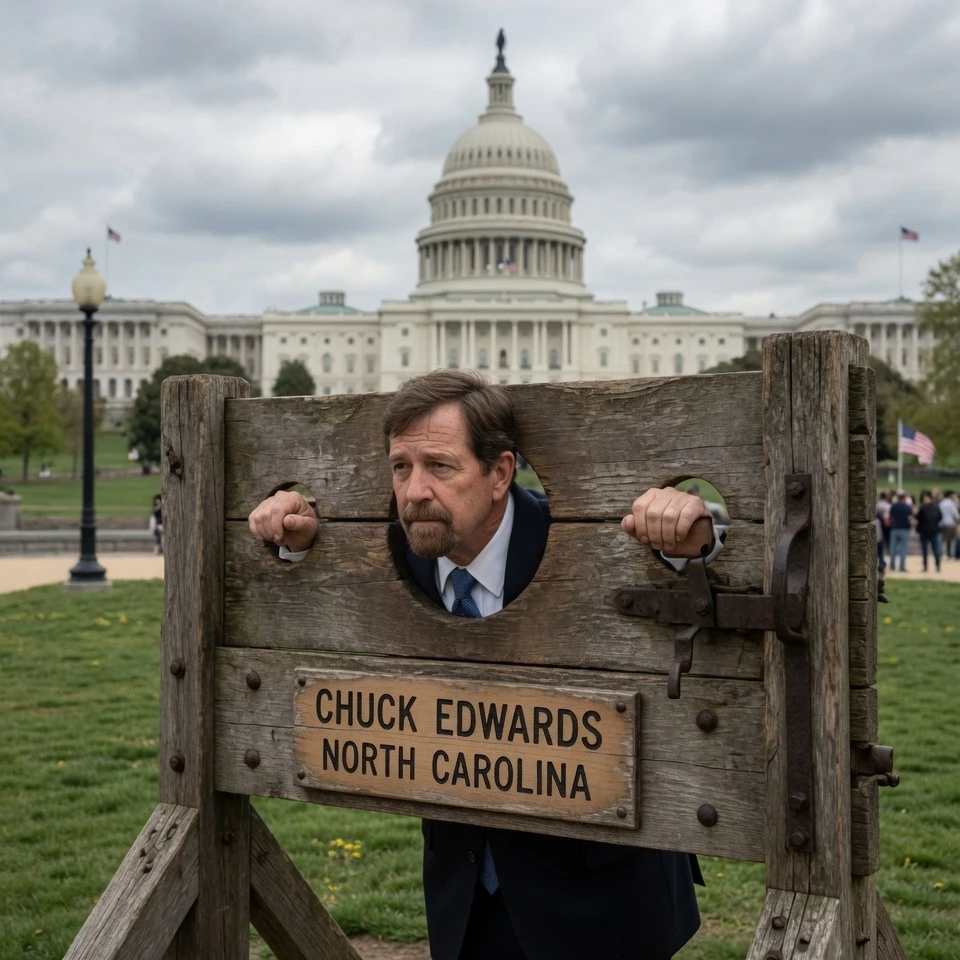
House Ethics Committee Censures Edwards For Gifts And Dinner Invitations by Grok is licensed under Grok xAI
House Ethics Committee Censures Edwards for Gifts and Dinner Invitations

War Department Thingamabob Rainbows Tehran Sky, Unsettling Guards and Globalists
A Heap Of Homo Hooligan Hell Hole Rainbow Lights Shock The Sand People. Was It US? Or Enoch? Or Some Other Alien?

Bessent Pins Hugging Face Incident on OpenAI Managers, Not Agents
Bots Aren't Gay...

Austin Protesters Learn Texas Differs From Minnesota After ICE Clash
Don't Mess With Texas!

Fonzie Jumped the Shark; Fifty Years of Failure Endure
Fake And (Almost Certainly) Gay - Jewish Greaser, Mind Control And The Pop-Culture Term That Lives On...

Ukraine’s Swarm Hits Moscow Refinery as Russia Warns Retaliation
World War Three, Anyone?

Iran Issues Code 100 as Trump and Netanyahu Rush Home
Turn Up The Volume!

Trump Forms AI Force and Czar; Will Not Stifle Industry
May The Force Be With You! Superior Intelligence Is The New AI!

No First Amendment Right To A Seat In West Wing
Mockingbird Press Pissed At Being Locked Out As They Are The "Deep-State-Run-Media" - The Propaganda Arm Of The Intelligence Community Driving Mind Control - Fucking Commies! God To Hell You Sickos!