The seismic signature that first registered as a modest earthquake along the Nepal-Tibet frontier was no tectonic rupture at all. The United States Geological Survey later established that the recorded waves were generated by the sudden failure of a glacier itself: a mass of ice and rock shearing free at roughly 5,200 meters and plunging more than a kilometer onto the valley floor. That collapse dammed, then catastrophically released, the Lhende River, sending a wall of water, mud, and debris through Gyirong and down the Trishuli. What remains unexplained is the precise trigger that loosened the ice. Warming high-altitude glaciers have grown unstable across the Hindu Kush Himalaya, yet scientists still decline to assign this particular failure to climate, construction, or some combination of both. The mystery is not merely technical; it is the latest reminder that the high plateau keeps its own counsel even as men scramble to explain it.
The torrent that followed did not “destroy much of Tibet.” Tibet is a vast plateau; the destruction was concentrated in a narrow border corridor around Gyirong Port and the adjoining Nepalese valleys. Hundreds are confirmed dead, more than a thousand missing, among them pilgrims, traders, and foreign trekkers. Chinese official figures remain characteristically spare—three dead on their side of the line, hundreds unaccounted for—while rescue operations proceed under the same tight administrative control that has defined Beijing’s presence since the 1950s. The disaster therefore arrives not as an isolated act of nature but as an event unfolding inside a long-running political project: the incorporation of a distinct people and landscape into a Han-centered state. Settlement, language policy, and the systematic thinning of monastic and nomadic life have been the instruments of that project for decades. A flash flood does not invent the policy; it merely exposes how thoroughly the plateau has been remade in the service of it.
Empires have always claimed the high ground, and they have always discovered that mountains answer to older laws than edicts from the capital. The Chinese state’s determination to absorb Tibet— demographically, culturally, and administratively—continues without pause, even as the ice itself proves less obedient than the maps. Whether the glacier failed from accumulated heat, from unnoticed engineering, or from some still-unmeasured combination, the result is the same: a sudden reminder that the land retains a capacity for violence that no five-year plan can fully anticipate. The dead and the missing will be tallied, the roads rebuilt, the border posts reopened. The deeper question is whether a civilization that treats a sacred plateau as raw material for incorporation can ever hear the warning the mountain just delivered.
Addtional ADNN Articles:
Hegseth Mandates Audits of Universities' China Russia Iran Ties
Chinese Unitree Robot Outruns Bolt Rendering Escape and Battle Futile
Stanford Scandal Conceals the Long American Embrace of Chinese Communism
Lala Unleashes Flooding Winds Leaving Hawaii Without Power Months

Mysterious Ice Collapse Floods Tibet as China Tightens Imperial Grip
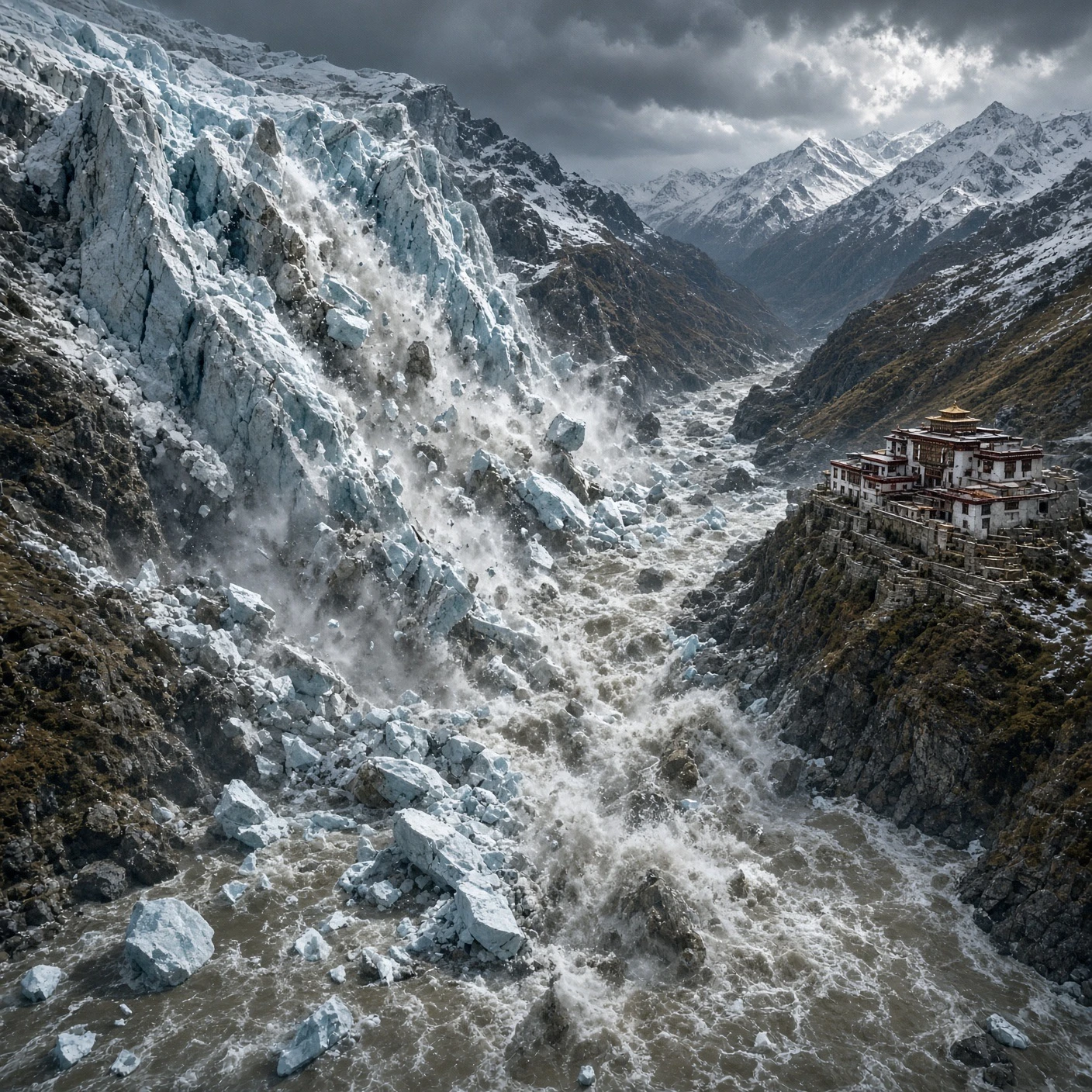
Mysterious Ice Collapse Floods Tibet As China Tightens Imperial Grip by Grok is licensed under Grok xAI
Mysterious Ice Collapse Floods Tibet as China Tightens Imperial Grip


Rial Collapses Past Two Million After America's Economic Siege
In God We Trust! Not Allah.

Curry Dies; Hollywood Saints the Monster It Now Denies
Let's Do The Time Warp Again!

Trump-Backed Darline Graham Seizes Senate Nod Over Norman
"F&G" = Fake & Gay...Hey Hey...Or...Fake and Graham



Dolly Parton Dies After Brief Cancer Battle, Beloved Icon Got Vaxxed
Clot Shot Ultimately Killed Her!

Economic D-Day Exposes Iran-Canada Financial Proxies of Global Control
New World Order! Let's Hope It Works To Our Advantage...We Shall See...