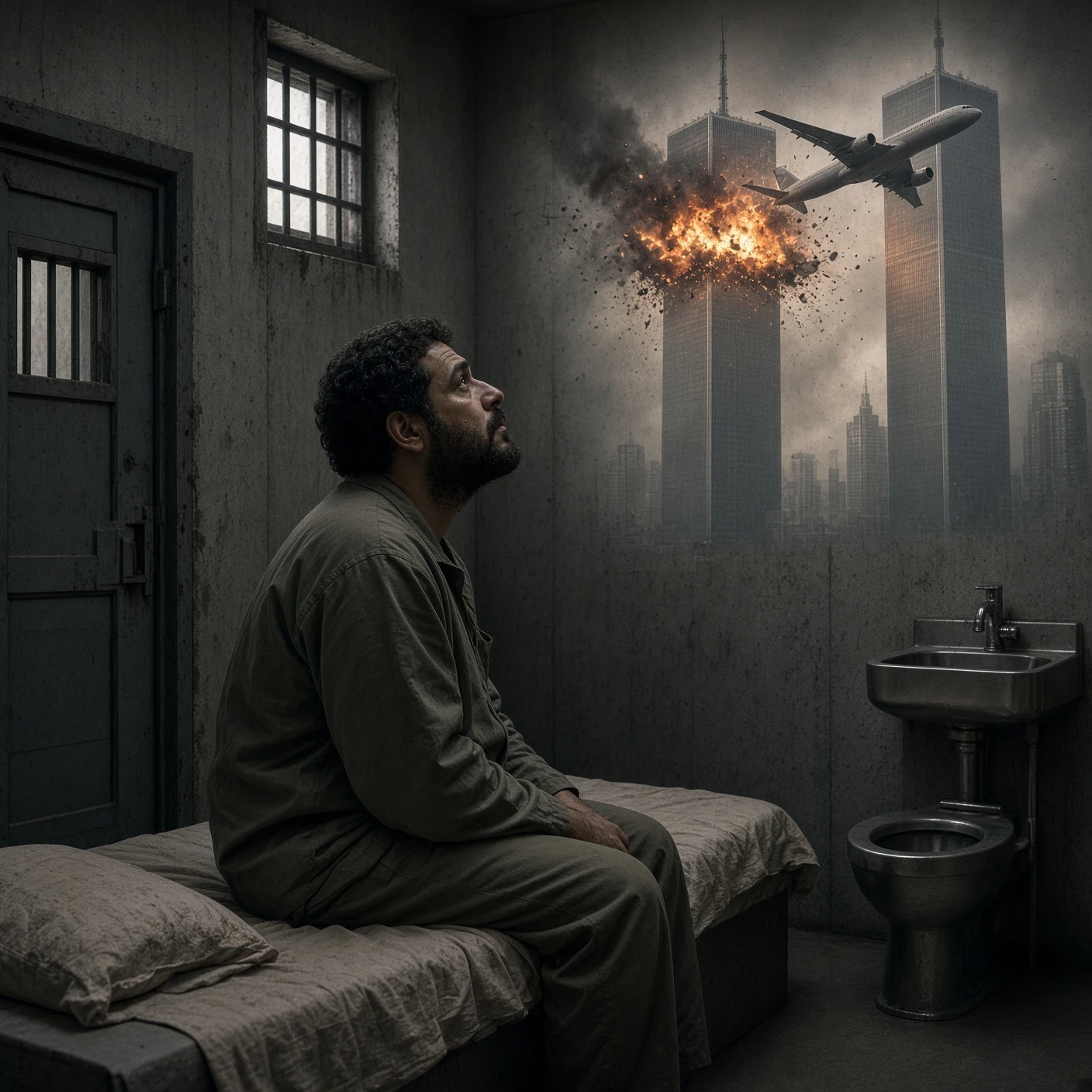
The 1993 World Trade Center bombing was not a failed sideshow. It was Ramzi Yousef’s first attempt to bring down the towers and kill on a scale measured in the hundreds of thousands. The truck bomb he and his confederates parked in the underground garage was meant to topple one tower into the other. It failed in that architectural ambition and killed six people instead. Yousef escaped. What followed was not improvisation. In Manila he and Khalid Sheikh Mohammed refined a second concept: commercial airliners as guided weapons, timed detonations across the Pacific, and a separate plan to fly a plane into a major American building. Philippine authorities stumbled onto the apartment after a chemical fire in January 1995. The papers, the laptop, the timing devices, and the operational notes were Bojinka. Yousef was captured weeks later. The idea did not die with his arrest.
What traveled from that Manila flat was a method. Khalid Sheikh Mohammed, Yousef’s uncle and co-planner, carried the concept forward after Yousef was in American custody. He presented a version of it to Osama bin Laden. Bin Laden supplied the organization, the money, the volunteers, and the decision to strike. The 2001 operation was therefore not a sudden inspiration of Afghan camps. It was the execution of a plot whose architecture had already been written, tested in part, and seized by intelligence services six years earlier. Attribution that begins and ends with bin Laden’s videotaped claims flattens the record. The man who first tried to level the Trade Center, and who then designed the airline-as-missile scheme while living in the Philippines, was Yousef. Bin Laden made the scheme work and claimed the fame.
That sequence matters because official memory prefers a single villain and a single date. It is easier to treat September 11 as the opening of a war that began in Afghan caves than to admit that the method had already been discovered, documented, and incompletely acted upon. Yousef sat in a Supermax cell when the planes hit. He did not pilot them. He did not fund the cells. He did, however, originate the two essential elements that defined the day: the target and the instrument. Bin Laden and his lieutenants took a plan that had already been written in a Manila apartment and gave it the scale, the discipline, and the publicity. History that refuses to name the first author is not history. It is a press release.
Additional ADNN Articles:
9/11 Anniversary: How Bojinka Plot in 1995 Foreshadowed U.S. Vulnerability to Bin Laden’s Attack
NYC Surrenders: 16 Landmarks Green for Muslim Heritage Month
Australia, France, Germany Cancel New Year’s Over Islamic Terrorism Threats
Iran Blamed for Bondi Hanukkah Terror: End Imported Tribal Hatreds

Ramzi Yousef Designed the Attack; Bin Laden Took the Credit
Ramzi Yousef Designed the Attack; Bin Laden Took the Credit

Trump Backs United Ireland as London Learns About Getting Even
Inter-Christian Religious War Stopped By Jewish President! God Can't Save The King...This Time.
Bush Still Calls Islam Peace Twenty-Five Years After 9/11
All I Can Think About It Bush!

9/11 Mastermind Faces 2028 Trial After Decades of Costly Delay
Again...Imagine Being A CIA Informant, Paid By The CIA & On Top Of The World...Then One Day For No Reason At All You Find Your Ass In GITMO!
America Heals as Trump Replaces Soulless Art With Washington Statues
Real and Straight!

Trump Honors 9/11 Dead While Mamdani Laughs Among Mourners
Never Forget...Unless You Think Its Funny? See My Mule, He Doesn't Think Its Nice You're Laughing...

Houthis Seize Red Sea Coast as Yemen’s Long Truce Unravels
La Guerre Tout Le Temps

Sole Black Juror Unmasks Progressive Racial Theater in Clancy Case
The World Is Black & White - As Well As - Upside Down! Did He "Know" That The Husband Was Guilty?

Trump Opens Nationwide October Barnstorm After Dallas Five-Thousand Dividend Pledge
Beating The Dems At Their Own Game...Its Funny. Because It Is All So Obvious!.