
The Southeastern Conference has marched into federal court in Alabama to accuse Louisiana State University and its newly installed head coach, Lane Kiffin, of waging “a deliberate and coordinated campaign to recruit professional athletes” for the 2026-27 football season. The complaint names players who signed NFL contracts with the Browns, Saints, and Buccaneers, notes that some of them are already practicing in Baton Rouge, and claims that LSU’s conduct violates the conference’s First Amendment right of expressive association. In other words, the league that once pretended college football was a gentleman’s pastime now insists that its member institutions must not be forced to associate with men who have already been paid to play the same game at a higher level. The timing is exquisite: the suit arrives just as a Louisiana state judge has opened the door for former professionals to return under a fifth-year eligibility ruling, and just as the conference itself contemplates expelling one of its own charter members.
What the SEC presents as a defense of principle is, in truth, a last-ditch effort to preserve a fiction that has already collapsed. The great college programs have long functioned as little more than well-appointed farm clubs for the professional leagues. They now compensate players through name-image-likeness deals, collectives, and transfer-portal bidding wars that would have been unthinkable a decade ago. The amateur ideal, once the conference’s most cherished costume, has been shed. To prosecute LSU and Kiffin for recruiting men who briefly sampled the NFL is to pretend that the remaining distinction between “college” and “professional” still possesses moral or competitive meaning. It does not. The only remaining question is whether the conference will admit what everyone already knows: these teams pay athletes, they develop athletes for the next level, and the product on Saturday is already a professional enterprise wearing school colors.
There is, therefore, no serious reason to treat this as a prosecutable offense. The conference’s own members have spent years dismantling the old amateur rules while clinging to the language of amateurism when it suits them. If the product is already professional in all but name, the proper response is not another lawsuit but a simple acknowledgment of reality. Let the players play. The stands will still fill, the television contracts will still be signed, and the only thing lost will be the last shred of institutional hypocrisy that the SEC now asks a federal judge to enforce.
Additional ADNN Articles:
Duke’s Divine Upset Smites NIL-Corrupted Virginia in ACC Glory
Bears Flee Chicago for Indiana After Illinois Politicians’ Costly Delay
Trump Moves to Ban Liberal ABA From Accrediting Law Schools
FIFA Enforces Four-Year Ban on USMNT for Professional Failure

SEC Sues LSU Over NFL Recruits as Amateur Myth Dies
SEC Sues LSU Over NFL Recruits as Amateur Myth Dies
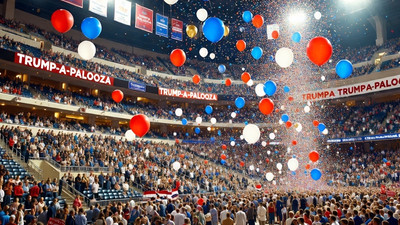
Republicans Stake Midterms On Dallas Spectacle Built Around Trump
Elections Are Fake And Gay. Period. We Shall See What The Powers That Be Have In Store? It Doesn't Feel Very Good From Where We Sit. But We Remain Ever Hopeful.
Dolls Descend on Fire Island Pines Recasting Gay Culture’s Enclave
Freaks And Faggots! Burn It Down...Live Up The Name...Fire Island!

Carney Scuttles Deal; Canada Tariffs America; Trump Redraws Continent
51st State Is Looking Pretty Good!
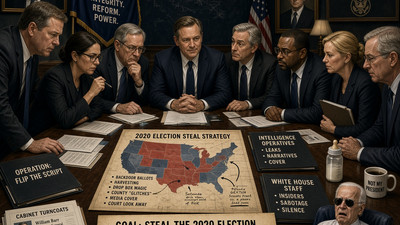
Taylor’s Insiders Opposed Trump; Eighty-One Million Votes Still Unexplained
Elections Are Fake And Gay!
America Heals as Woke Smithsonian Chief Lonnie Bunch Steps Down
But Black Lives Matter...Maybe History, Real History Matters More Than Anything!