
I’ll check the Siberian plague report first so the three paragraphs rest on what actually happened, not the rumor cycle.A twenty-eight-year-old laboratory technician is dead in eastern Siberia, and Moscow would prefer the rest of the world treat the matter as a provincial medical footnote. Darya Shipilova worked at the Irkutsk Anti-Plague Research Institute of Siberia and the Far East in Shelekhov, was admitted on September 29 with severe pneumonia, and died in the first days of October. Rospotrebnadzor, the federal consumer-protection agency, calls the cause “pneumonia of unknown etiology” and insists no laboratory accident involving a pathogenic microorganism occurred. The governor of neighboring Buryatia was less circumspect, saying she may have died of plague. Independent outlets report that she told staff she had broken a tube of live bacteria while handling samples. That claim remains unconfirmed, and a commission has denied it. What is not in dispute is the scale of the response: roughly 197 contacts identified, about 189 of them placed in hospital wards for observation, the facility where she was treated put under quarantine, and several Irkutsk hospitals reported closed to ordinary admissions and discharges. The State Department says it is watching the case with the CDC. Contacts so far show no illness, and laboratory results have been described as negative.
The public reaction has not been epidemiological so much as political, and that is the instructive part. Pneumonic plague, caused by Yersinia pestis, is an old and treatable disease when antibiotics are given early; it is not a novel respiratory virus with an unknown fatality curve. Yet the combination of a plague institute, a dead technician, a denied accident, and a near-two-hundred-person observation order has been read, almost at once, as the opening scene of another managed emergency. The memory that governs the reading is Wuhan. Citizens who watched borders close, schools empty, and small businesses fail on the strength of models and press conferences are no longer disposed to grant the benefit of the doubt to a laboratory story told in the passive voice. They notice that the official language arrives already sanitized, that a neighboring official speaks of plague while the federal agency speaks of unknown pneumonia, and that an aluminum plant in Shelekhov has ordered masks as a “precaution.” Suspicion of that kind is not hysteria. It is the residue of a regime that spent 2020 teaching ordinary people that public health could be the instrument of a political economy.
What the internet is registering, then, is less a fear of the Black Death than a refusal to underwrite a second shutdown in the name of a pathogen whose origin cannot be audited. Government laboratories that culture plague, anthrax, and their cousins exist in every serious state; accidents in them are a known occupational hazard, not a conspiracy by themselves. The harder question is institutional. When the same class of authorities that once demanded universal compliance now asks for trust on an unconfirmed exposure at a facility built to study the organism in question, the audience hears the old script. Nobody of sound mind wants the world economy halted again because a state-sponsored research program lost control of a sample, or because a ministry found it useful to pretend that it had. The sane demand is narrower and older than the panic: name the organism, publish the exposure, treat the contacts, and stop asking free societies to suspend themselves on the word of men who have already spent their credibility.
Additional ADNN Articles:
Tulsi Gabbard Bombshell Exposes Fauci’s Wuhan Gain-of-Function Lies!
Tulsi Gabbard Reveals US Biolabs That Sparked Russia’s Ukraine Invasion
Fauci Denied Wuhan Lab COVID Origin and Faced No Reckoning
Unnatural COVID Variants Exposed as CDC Planned Quarantine Camps

Siberia Plague Death Revives Fear of Another Managed Shutdown
Siberia Plague Death Revives Fear of Another Managed Shutdown

America Recalls Its Bombers and Should Recall Britain’s Missiles
Spy War...Trump Knows...The Commies Lose!
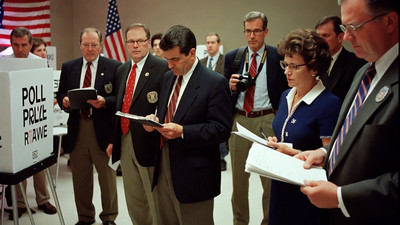
Blanche: Unarmed Monitors Return; The Old Frauds Will Not.
Time For Observation...MAGA Style!
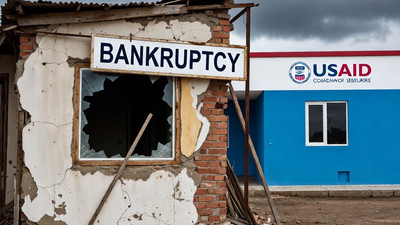
USAID’s end bankrupted the clients and restored the country.
America.Gov Is ALL That Matters Now...Transparency Time!
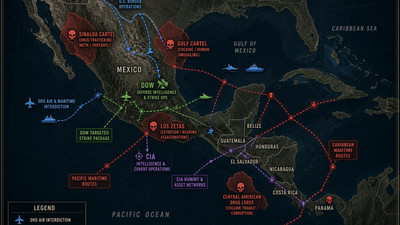
Distant Wars Distract From the Cartel Fight at Home
The War At Home! Mi Casa, Su Case!

Bond Market Turns Bidless as Yields Breach Twenty-Year Highs
Running Out Of Options...Trump Will Win!
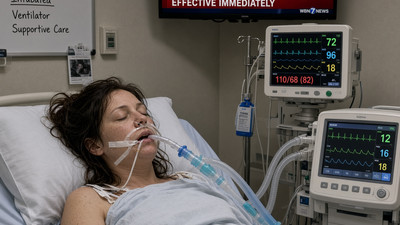
Tennessee’s Execution Architect Quits After Second Failed Death
Pull The Plug Already!!!

Musk Drops AI for SI, Renames SpaceXAI to SpaceXSI
Super Intelligence Is Where Its At! It's All SI These Days...

Trump Claims Time’s Cover Crown on America First Terms
Time Takes Time = Trump Time.