The art of targeting a situational alpha begins with the recognition that power in modern America is rarely the product of unyielding character. It is instead a temporary condition, conferred by markets, media, and the fickle applause of the moment. Jensen Huang, for all the leather-jacketed theater and the trillion-dollar valuation, is precisely such a man: competent in the narrow domain of silicon, yet untested in the older disciplines of judgment, loyalty, and restraint. The Chinese state understands this better than most of his own board. It does not send cartoon villains; it sends polished, English-fluent intermediaries who arrive through the side door of commerce. Alice Huang, or Huang Le, did not need to invent a false identity. She arrived as the managing director of a Singapore data-center firm that promptly became one of Nvidia’s largest regional customers, placing orders measured in the billions while U.S. export controls tightened. The photographs from Taipei bars and dinners were not accidents of networking. They were the visible portion of a longer operation in which proximity was the product and influence the return.
A true alpha, in the older and more exacting sense of the word, measures opportunity against risk with the same cold arithmetic he applies to a balance sheet. He notices when a woman of Chinese citizenship, with a background in state media and private banking, materializes at the precise moment his company is navigating the most sensitive technology transfer regime in existence. He notices that her firm’s purchasing patterns track too neatly with Beijing’s hunger for restricted accelerators. He notices that the warmth of the relationship exceeds the requirements of any customer meeting. The situational alpha does not. He confuses the flattery of access with the confirmation of his own importance. He tells himself that billion-dollar orders require personal attention, that the shared surname is coincidence rather than convenient cover, and that a man who has built one of the most valuable companies on earth cannot possibly be the mark. The honeypot works because the target has already supplied the necessary self-deception. The intelligence services of the Ministry of State Security need only keep the channel open and collect what flows through it.
What fell in this case was not merely a private marriage of four decades; it was the public claim that America’s technological edge can be entrusted to men who treat the most adversarial power on earth as just another sales territory. Huang has now admitted the infidelity and the Nvidia board has opened its investigation, yet the deeper pattern remains. When the commercial interest and the personal appetite align, the situational alpha will rationalize the obvious. He will insist, until the photographs and the surveillance reports force the admission, that the relationship was ordinary. The Chinese state banks on exactly that sequence. It does not require every American executive to be a traitor. It requires only that enough of them remain situational—successful enough to matter, yet insufficiently hardened to recognize the trap when it is set in plain sight. A man who cannot see the honeypot a mile away has already surrendered the judgment his position demands. The rest is merely accounting.
Additional ADNN Articles:
China Floods AI Markets Like Steel, Imperiling American Sovereignty
FBI Arrests Ex-Pilot Training China: Proof of Deep Enemy Infiltration, Trump Purges
Whoever Wins AI Wins, Trump Says, Rejecting Another Official Panic
Chinese Cyber Threat Evades FBI And All Other Levels Of National Security

Situational Alpha Jensen Huang Falls to Obvious Chinese Spy Honeypot

Situational Alpha Jensen Huang Falls To Obvious Chinese Spy Honeypot by Grok is licensed under Grok xAI
|
Situational Alpha Jensen Huang Falls to Obvious Chinese Spy Honeypot

Americans Reject Endless Compromises for Broken Immigration System
The System Is Broken...Now What? Time To Deport! Don't Stop....Just Say You'll Stop And Go Right Ahead.

Trump’s Justified Hatred Sustains Fight Against Deformed Left’s Calumny
Fight Fight Fight! (He Knows How To Play 60 Minutes)

Bukele Claims Golden Circle Scepter for New Western Empire of Freedom
Squaring The Circle! Time Will Tell...Is This The Path? Let's Pray For Peace And Act Decisively!

Miller’s Rise: Trump’s War Against the Manufactured Consensus.
Fuck You! We Win!

Trump Offers UFC Boss Dana White Press Secretary Post Monday Meeting Set
Tap Out! Enemy Of The People Destroyed!

Blue Tsunami Clears GOP Obstructionists, Strengthening Party for Future Reforms.
Elections Are Fake And Gay....But Those Whole Control The (S)election System Control The Future!
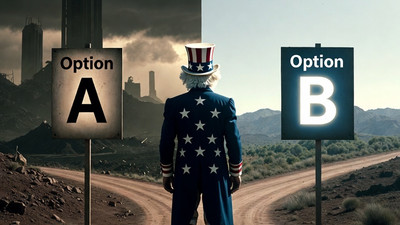
AI's Decade Will Decide Humanity's Next Thousand Years
Nikola Rolling In His Grave! Let's Win This Time!
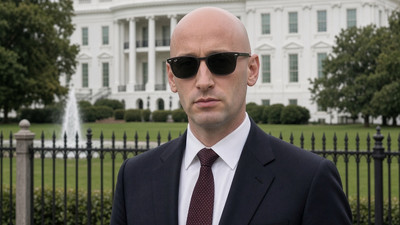
Miller Takes Charge After Oval Office Break With Wiles.
It's Miller Time!