The State Department’s nearly one-hundred-page indictment, Cuba: The Capital of 21st Century Communism, arrives not as bureaucratic paperwork but as a long-overdue reckoning with a hostility that has never been merely diplomatic or economic. Havana’s project, the document makes plain, has always been civilizational: a sustained effort to turn the children of the West against their own inheritance, recruiting American radicals, penetrating the highest echelons of our government, and laundering revolutionary doctrine through the language of solidarity. From the Venceremos Brigades of the late 1960s—those carefully curated pilgrimages that funneled idealists into the service of the DGI—to the present-day solidarity junkets and rhetorical alignments that knit together the Democratic Socialists of America, Code Pink, and various Black Lives Matter chapters, the pattern is unbroken. The report names the moles who succeeded beyond Havana’s wildest hopes: Ana Montes, who sat at the heart of the Defense Intelligence Agency feeding secrets to her handlers; Victor Manuel Rocha, who rose through the National Security Council and the ambassadorial ranks while serving a foreign power for decades. These are not Cold War curiosities. They are proof that the open society’s greatest vulnerability remains its own readiness to believe the best about those who openly despise it.
What the document restores to public view is the continuity of method. Cuban intelligence did not invent the American radical left; it merely recognized its utility and supplied the discipline, the tradecraft, and the ideological finishing school that domestic discontent lacked. The same networks that once trained Weather Underground cadres and Black Panther emissaries now host progressive activists whose shared vocabulary—“solidarity,” “anti-imperialism,” “decolonization”—functions as a password rather than a policy. The State Department’s authors do not shy from the comparison that polite society has spent seventy years trying to bury: the counterintelligence measures of the 1950s, however imperfectly executed, understood that ideological subversion is not a free-speech exercise but a form of political warfare. To treat every subsequent Cuban-sponsored junket, every campus affinity group, every foundation-funded “people-to-people” exchange as protected expression is to disarm in the face of an adversary that has never observed the same scruples. The report’s candor on this point is its greatest service. It refuses the comforting fiction that the Cold War ended and that Havana’s ambitions retired with it.
In the end the document is less a historical brief than a diagnosis of American amnesia. We have grown so accustomed to the spectacle of domestic radicals toasting foreign tyrannies that we no longer register the scandal. A regime that jails its own poets, starves its people, and maintains signals-intelligence facilities ninety miles from our coast continues to enjoy the unearned prestige of “resistance” among certain quarters of our political class. The State Department has now placed the receipts on the table—names, dates, organizational charts, the long trail from the Tricontinental Conference to the latest solidarity conference. Whether the republic still possesses the institutional memory and the moral clarity to act on them remains the open question. The clowns who ring the bell of progressive solidarity will howl “McCarthyism.” History, and the careful reader of this report, will know better.
Additional ADNN articles:
Cuba’s Humanitarian Catastrophe: Hunger, Blackouts, Disease, Mass Exodus, Communism
DOJ Indicts Raul Castro Shocking Marxists as Cuban Regime Crumbles
Communist Parasite Cyclospora Invades and Weakens America from Within
The Kingdom Of Eswatini Welcomes 3rd Worlders To Its Prisons

State Department Exposes Cuba as Capital of 21st Century Communism
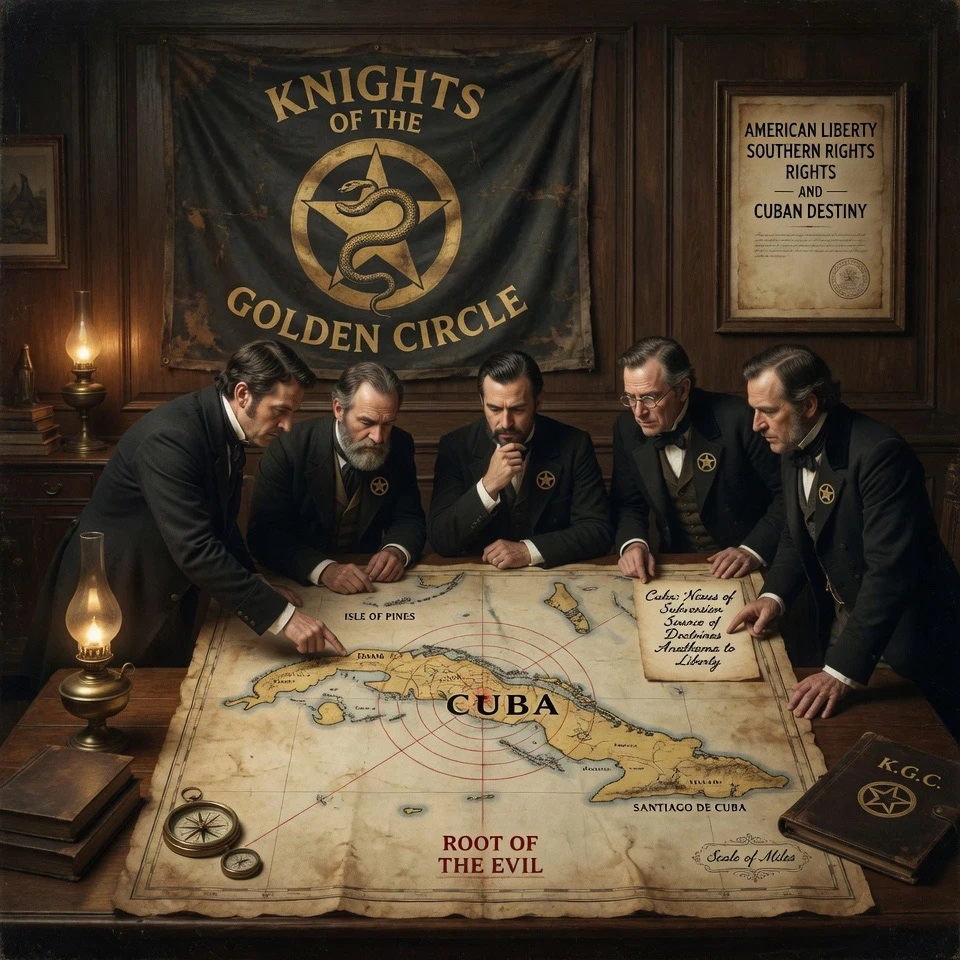
State Department Exposes Cuba As Capital Of 21st Century Communism by Grok is licensed under Grok xAI
State Department Exposes Cuba as Capital of 21st Century Communism
Carney Scuttles Deal; Canada Tariffs America; Trump Redraws Continent
51st State Is Looking Pretty Good!
Taylor’s Insiders Opposed Trump; Eighty-One Million Votes Still Unexplained
Elections Are Fake And Gay!
America Heals as Woke Smithsonian Chief Lonnie Bunch Steps Down
But Black Lives Matter...Maybe History, Real History Matters More Than Anything!


Witkoff, Kushner Hold Encouraging Kyiv Talks, No Peace Breakthrough
Jews For Peace! Thanks to יהוה,
Study Finds Citizens Powerless as Elites and Agencies Control Elections
Elections Are Fake And Gay!
Two Die at Burning Man, Called Shape Store for Whites
Faggotry Never Pays...This Thing Is So Stupid!