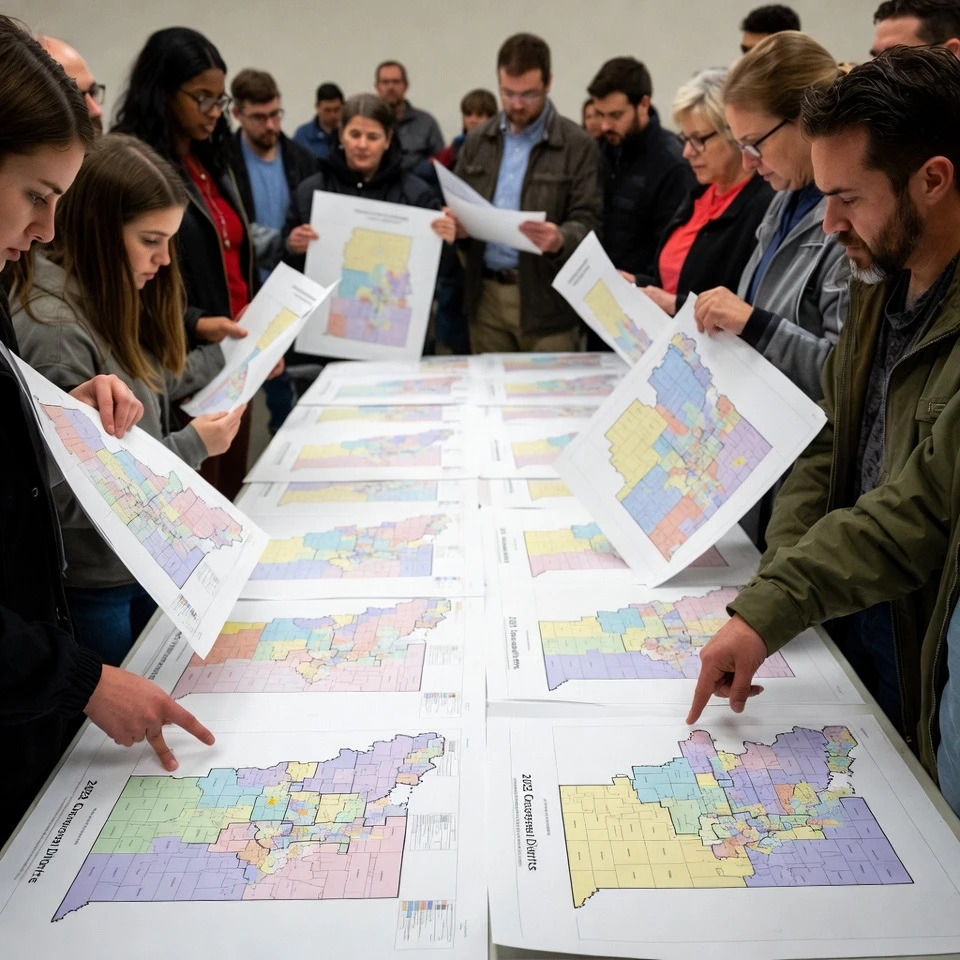
The Supreme Court on Thursday stayed a federal district judge’s order that would have compelled Missouri to run its November congressional elections on the 2025 map, and thereby returned the state to the districts enacted after the last census. The one-page order, issued without noted dissent, halted Chief Judge Stephen Clark’s temporary restraining order and revived the Missouri Supreme Court’s unanimous holding of September 3: the mid-decade statute never took legal effect because a valid referendum petition had already suspended it. Election officials are again under instruction to use the 2022 lines for the general election and to place the 2025 plan on the November ballot as Proposition A. That the Court acted twice in one week—first when Justice Kavanaugh declined to disturb the state court’s construction of Missouri’s own constitution, then when the full Court stayed the federal judge who had tried to override it—does not enlarge federal power so much as it exposes how quickly a single district-court TRO can be used to rewrite a state’s election calendar after the fact.
What makes the episode a genuine blow to state control is not that Washington drew the lines, but that a federal trial court treated the completed primary as a constitutional lock on a map the state’s highest court had already declared a nullity. Missouri’s legislature passed the 2025 plan in special session; the governor signed it; primaries were conducted under it. The Missouri Supreme Court then held that the referendum clause of the state constitution applied to “any act of the general assembly,” that the petition was sufficient, and that the 2022 map therefore remained the only map in force. Clark answered that switching maps after nomination would “wreak havoc” and implicate federal rights of voters and candidates. The Supreme Court’s stay does not decide those federal claims on the merits. It does decide that a lone federal judge may not, on an emergency calendar two months before Election Day, displace a state supreme court’s construction of state law about when a state statute becomes law. That is the precise point at which state authority over the times, places, and manner of congressional elections is supposed to be at its strongest.
The practical result is the awkward one everyone foresaw: nominees chosen in August under one set of lines will stand in November under another, while voters simultaneously decide whether the 2025 map should govern future cycles. That inconvenience is real. It does not convert a state-law referendum into a federal constitutional crisis, nor does it license a district court to treat reliance on an invalid statute as a reason to keep the statute. If the Elections Clause still means that states, not itinerant federal judges, set the ground rules for choosing members of Congress, then a stay that restores the state’s own highest court is not an invasion of state sovereignty. It is the minimum required to keep sovereignty from becoming a slogan recited only when the map is the one a particular faction prefers. The House majority may be affected. The principle at stake is older than that majority, and more important.
Additional ADNN Articles:
Supreme Court Blocks Virginia’s Gerrymandered Map Locking 10-1 Democrat Edge
South Carolina House Passes 7-0 Map Ousting Rep. Clyburn
Senate RINOs Reject SAVE America Act Blocking Nationwide Voter ID
SCOTUS Ruling Constitutionalizes Curated Elections Safeguarding the Global American Empire

Supreme Court Halts Federal Map, Missouri Returns to 2022 Lines
Supreme Court Halts Federal Map, Missouri Returns to 2022 Lines

Trump Opens Nationwide October Barnstorm After Dallas Five-Thousand Dividend Pledge
Beating The Dems At Their Own Game...Its Funny. Because It Is All So Obvious!.
Kirk’s Murder Marks Civilizational War; Enemies Sow Discord Among Mourners
The Truth Shall Set You Free! Whoever You Are...
Kimmel Learns Broadcast Law Forbids Late Night as DNC Arm
Equal Time. So Ironic...Fags...
Republicans Stake Midterms On Dallas Spectacle Built Around Trump
Elections Are Fake And Gay. Period. We Shall See What The Powers That Be Have In Store? It Doesn't Feel Very Good From Where We Sit. But We Remain Ever Hopeful.


SEC Sues LSU Over NFL Recruits as Amateur Myth Dies
Fake And Gay (mostly)...Don't Hate The Playa, Hate The Game!
Dolls Descend on Fire Island Pines Recasting Gay Culture’s Enclave
Freaks And Faggots! Burn It Down...Live Up The Name...Fire Island!

Carney Scuttles Deal; Canada Tariffs America; Trump Redraws Continent
51st State Is Looking Pretty Good!