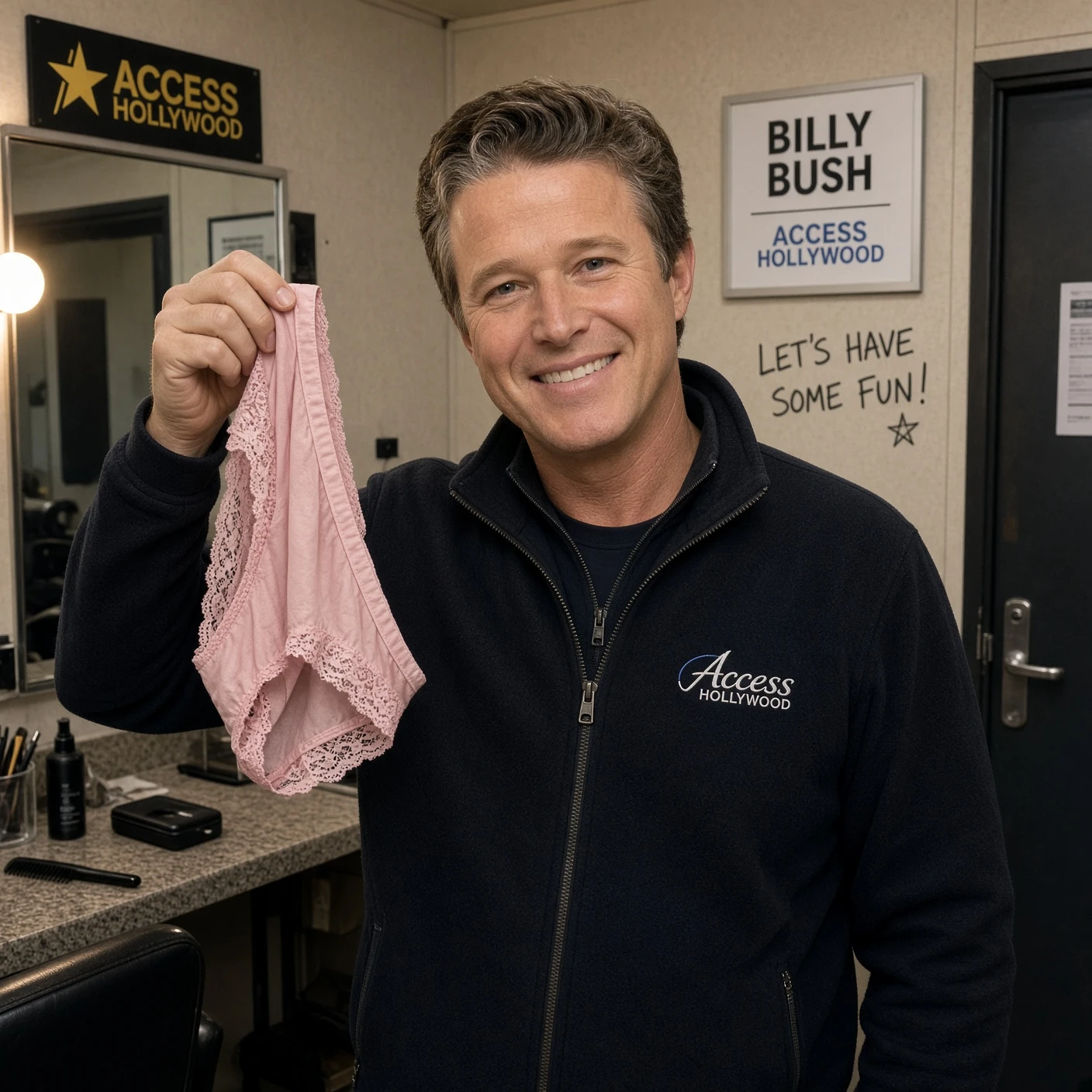
It has been a full decade since an unnamed producer dredged up that 2005 Access Hollywood recording, and the cultural machinery that followed still treats Donald Trump’s offhand remark to Billy Bush as if it were a confession rather than an observation. In the raw audio, Trump notes that fame confers a certain license: “when you’re a star, they let you do it… Grab ’em by the pussy.” The “they,” plainly, were the women who sought the company of prominent men; the “it” was the rough-and-ready physicality that, in less puritanical eras, was understood as part of the bargain between celebrity and those who court it. The remark was crude, but it was also candid—an acknowledgment, common enough in private male conversation, that power and beauty have long operated on unequal terms of initiation and consent. What the subsequent decade of commentary has refused to examine is whether the observation itself held any descriptive force.
The #MeToo cascade that arrived a year later supplied an inadvertent test. Across Hollywood, media, finance, and politics, women who had once positioned themselves in the orbit of famous men came forward to describe encounters that, by their own later account, crossed into assault. In case after case the narrative was nearly identical: an initial willingness to be in the room, an acceptance of advances that only later, under changed social conditions, was recast as non-consent, and a demand that the man be publicly ruined while the woman’s earlier agency was erased. The sheer volume of such accounts—thousands, not dozens—suggested that Trump’s locker-room formulation had captured a real pattern rather than an isolated fantasy. Fame did not invent the dynamic; it merely concentrated it. Women of ambition or vanity had long traded proximity for the possibility of advantage, and many discovered, once the political weather shifted, that they could reverse the transaction by redefining the earlier exchange as victimization. The public shaming and institutional punishment that followed were not corrections of an earlier crime so much as the enforcement of a new, retrospective standard.
What remains striking, ten years on, is the refusal of the same institutions to treat the original remark as evidence rather than original sin. The Access Hollywood tape was never a boast of completed assaults; it was a blunt recognition that certain women, in certain circumstances, permit what others later condemn. The #MeToo record, for all its excesses and fabrications, largely confirmed the premise while denying the implication. The result has been a selective amnesia: the men who noticed the pattern are permanently disqualified, while the women who participated in it are granted absolute innocence once they reverse their story. A culture that cannot distinguish between a crude observation and an actionable crime, and that will not examine the incentives that produced both the original encounters and their later repudiation, is a culture that has chosen narrative control over accurate description. The tape still exists; the pattern it named still exists; only the willingness to say so has been placed under formal prohibition.
Additional ADNN Articles:
Hollywood's 130K Actors Chase 30K Jobs, Enforcing Leftist Conformity
Trump’s TDS Trebuchet Blasts Hollywood: Reiner Death Psych Op Masterstroke
Melania Doc: Enigma Propaganda Baffles Critics, Breaks Fashion Hearts
Bush Still Calls Islam Peace Twenty-Five Years After 9/11

Trump’s 2005 Remark Proved True by #MeToo’s Own Admissions
Trump’s 2005 Remark Proved True by #MeToo’s Own Admissions

Trump Forges Russian Diesel Pact After Zelensky Ignores Six Requests
And Even More Special Relationship! Bros Before Hoes!

Atomic Machines Exits Stealth to Build Micro-Machines From Code Alone
The Future Is Now!
Trump Asks the Supreme Court to Revive Clinton Russia Lawsuit
Trust The Plan? Or Is This Just More Hopium? If It Is Gonna Be Done, Its Gotta Be Done Right!

Oslo honors a jurist, ignores Iran’s broken bomb and farm murders.
Peace? Fake And Gay Knows No Bounds!
Strasbourg’s gilded Trump satire admits the man it meant to mock.
TDS Is Real And On Par With Any Psychosis Known To Mankind!

SpaceX buys low-band spectrum; Starlink threatens the wireless oligopoly.
Can You Hear Me Now?


Rubio on the Pnyx: America Rejects Servitude, Decline, and Communism
#WLY - The Basis For All That Is Great!