In the opening months of 2026, President Donald Trump’s foreign policy has unfolded with a series of bold, unilateral actions that have reshaped U.S. engagements across multiple regions. The capture of Venezuelan President Nicolás Maduro in a swift military raid not only removed a long-standing adversary accused of narcotics trafficking and human rights abuses but also allowed the U.S. to redirect significant portions of Venezuela’s oil exports away from China, securing American influence over a key resource hub. Simultaneously, Trump’s renewed push to acquire or control Greenland, framed as a national security imperative to counter Russian and Chinese Arctic ambitions, has deterred potential encroachments by foreign powers without escalating to full annexation, though it has strained relations with Denmark and Europe. The joint U.S.-Israeli strikes on Iran, which resulted in the death of Supreme Leader Ayatollah Ali Khamenei, eliminated a major geopolitical threat and underscored the dangers of Iran’s nuclear pursuits, compelling European allies to reassess their longstanding diplomatic leniency toward Tehran. These moves, executed with minimal U.S. casualties, have collectively enhanced American leverage in global energy markets, particularly by disrupting China’s access to approximately 42% of its oil imports through Venezuelan and Iranian channels.
Beyond direct interventions, Trump’s strategy has ripple effects that realign alliances and economic dynamics on the world stage. By imposing tariffs on entities trading with Iran and seizing control of Venezuelan oil flows, the U.S. has effectively commandeered aspects of the international shipping and insurance sectors traditionally dominated by London-based firms, redirecting profits and oversight to American interests. This has restored a perception of the U.S. as a restrained yet formidable power, willing to act decisively when provoked, which has galvanized Sunni Arab states to align more closely with Israel in confronting Shia-led Iran and its proxies. The policy vindication on Iran’s nuclear ambitions has exposed decades of European self-sabotage in international affairs, pushing the continent toward tougher stances. Meanwhile, these actions have sidelined China from key resource plays and diplomatic arenas, while pressuring Russia to weigh the benefits of partnering with the U.S. against continued alignment with Beijing, especially amid ongoing tensions in Ukraine and the Arctic.
The rapidity and scope of these shifts mark a potentially unprecedented pivot in the international order, achieved at remarkably low cost in terms of American lives and treasury expenditures. Critics label the approach as neo-imperialist, highlighting risks of broader conflicts or alliance fractures, yet proponents argue it has efficiently countered adversarial expansions without drawn-out wars. Whether this represents a masterful realignment or a high-stakes gamble remains debated, but the early 2026 developments under Trump suggest a departure from multilateral norms toward a more assertive, transaction-based U.S. hegemony, forcing global actors to adapt to a reinvigorated American presence.
Additional ADNN Articles:

Trump’s 2026 Blitz: Crushing Threats, Seizing Oil, Reshaping World Order
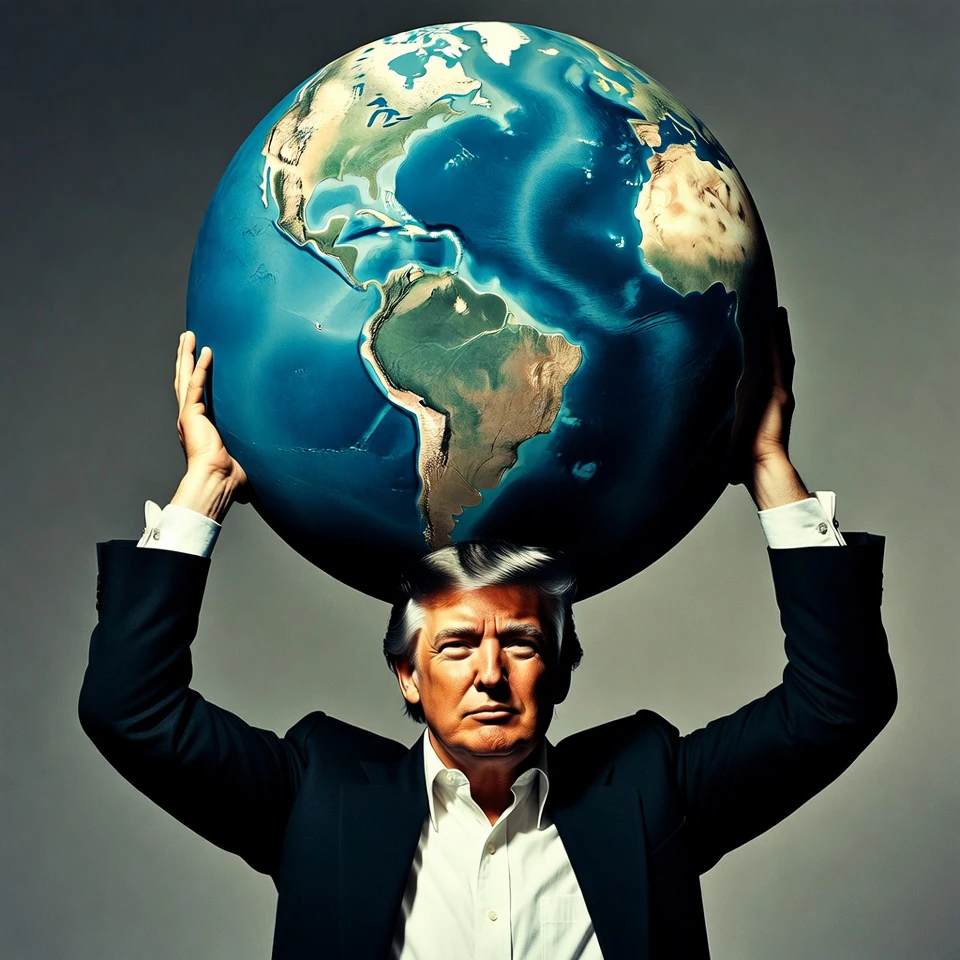
Trump S 2026 Blitz Crushing Threats Seizing Oil Reshaping World Order by Grok is licensed under Grok xAI
Trump’s 2026 Blitz: Crushing Threats, Seizing Oil, Reshaping World Order
Carney Courts Phantom EU Rank and Gifts MAGA Canada's Split
How To Lose A Territory...101 - The Revolutionary War Continues.
Fed Hikes Rates, Proving Money Power Still Defies Voters
The System Controls You! Dead Or Alive...
The United States Will Never Be an Effective Altruist Country
Real And Straight. Always. Try Your Weak Communism Elsewhere. Or Better Yet...Go To Hell!

First Woman Primate Honors Bin Laden’s Champion; Wife Erased Beside Him.
Clown World! - Dark Clowns!
Xi Hospital Rumor Exposes a China Unable to Succeed Him
Chicom Is Awhirl With Anticipation...Who Poisoned XI? Imagine Elaine And Mitch Together?? Sickening...
Saudi Warns Mecca a Red Line After Houthi Drone Intercepted
Turn The Place To Glass Already!!!
Patel Holds Senators for Hours, Declining Their Ritual Script
Sacred Cows?? I'll Show You The Real Shit! Says The Pajeet Patel! Truth Bombs Left And Right!
Anthropic Wants Woke Altruistic Communists Regulating Every Other AI Firm
Physiognomy, Politics And Psychosis + Liberal, Leftist And Losers = Bad For Humanity, Thus Slated For Termination By The AI. You'reTerminated!