In the late 19th century, archaeologist Cyrus Thomas, working for the Smithsonian Institution’s Bureau of Ethnology, compiled one of the most comprehensive maps of prehistoric earthen structures in North America. His detailed survey revealed dense concentrations of mounds and geometric enclosures stretching from the Great Lakes region in the north down to Florida in the south. These features were particularly abundant along major river systems such as the Ohio and Mississippi Rivers, which served as vital corridors for ancient societies. Thomas’s work helped shift scientific understanding away from earlier speculative theories and toward recognition of these structures as the achievements of indigenous North American cultures.
The mounds and enclosures were constructed by several successive and overlapping cultural traditions, most notably the Adena, Hopewell, and Mississippian peoples. The Adena and Hopewell cultures, centered in the Ohio River Valley, are renowned for their elaborate burial mounds and sophisticated geometric earthworks, including circles, squares, and octagons aligned with astronomical events. The later Mississippian culture built massive platform mounds that supported elite residences, temples, and ceremonial spaces, with Cahokia near modern-day St. Louis representing the largest and most complex example. These structures served multiple purposes: as monumental burial sites for important individuals, platforms for public rituals, and symbolic enclosures that likely held cosmological and social significance for their builders.
Today, advanced technologies like LiDAR (Light Detection and Ranging) are revealing hundreds of previously unknown mounds and features hidden beneath forests and farmland, expanding our understanding of the scale of this ancient landscape. While an estimated 200,000 mounds may have once existed across the eastern United States, the vast majority were leveled by agricultural plowing and urban development over the past two centuries. Fortunately, key sites have been protected, including Ohio’s Hopewell Culture National Historical Park, which achieved UNESCO World Heritage status, and Cahokia Mounds State Historic Site in Illinois. These preserved locations stand as powerful reminders of the engineering skill, spiritual depth, and organizational complexity of the ancient mound-building societies.
Additional ADNN Articles:
David Reich: Ancient DNA Exposes Violent Cultures, Shatters Peaceful Myths
Redford’s Final Wish: Jeremiah Johnson Hailed as His Greatest, Mirroring America’s Conquest
Italian Radar Detects Buried Second Sphinx at Giza
Memorial Day Honors Dee Bacon Washington Vision of New Atlantis

Cyrus Thomas Maps Dense Ancient Mound Network Across Eastern America
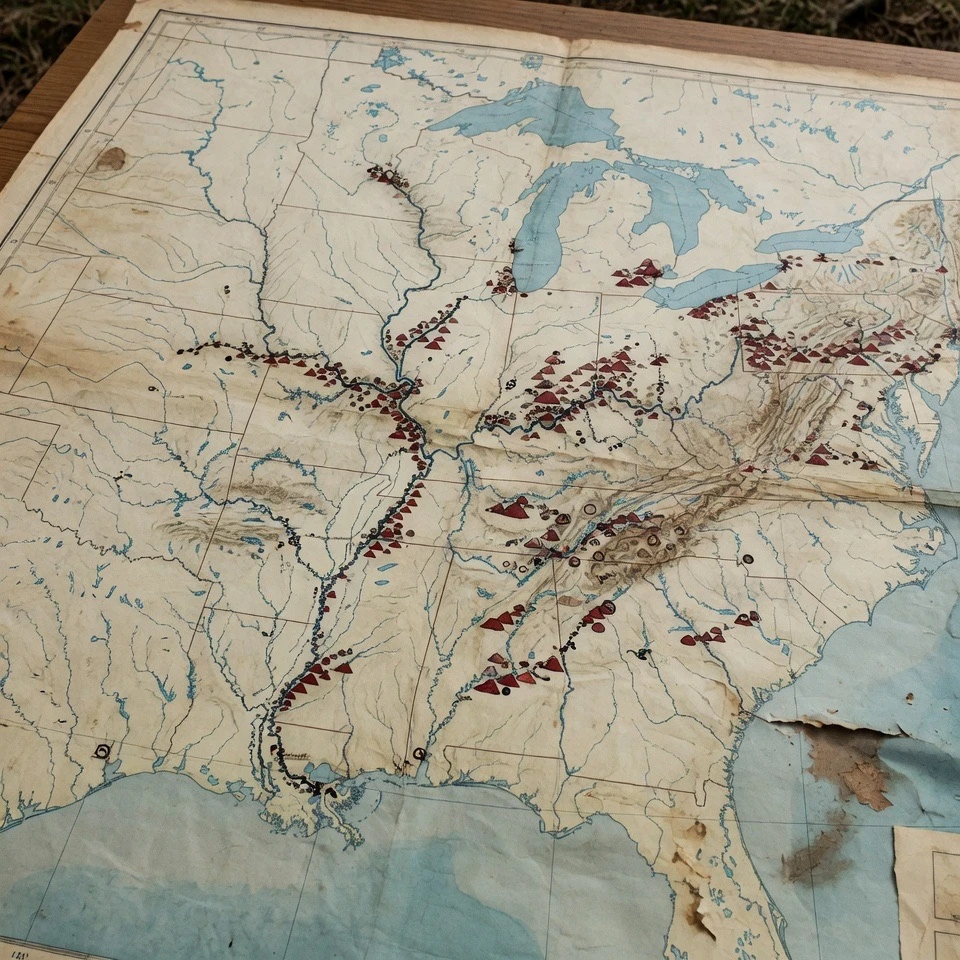
Cyrus Thomas Maps Dense Ancient Mound Network Across Eastern America by Grok is licensed under Grok xAI
Cyrus Thomas Maps Dense Ancient Mound Network Across Eastern America

Carney Scuttles Deal; Canada Tariffs America; Trump Redraws Continent
51st State Is Looking Pretty Good!

Taylor’s Insiders Opposed Trump; Eighty-One Million Votes Still Unexplained
Elections Are Fake And Gay!
America Heals as Woke Smithsonian Chief Lonnie Bunch Steps Down
But Black Lives Matter...Maybe History, Real History Matters More Than Anything!


Witkoff, Kushner Hold Encouraging Kyiv Talks, No Peace Breakthrough
Jews For Peace! Thanks to יהוה,

Study Finds Citizens Powerless as Elites and Agencies Control Elections
Elections Are Fake And Gay!
Two Die at Burning Man, Called Shape Store for Whites
Faggotry Never Pays...This Thing Is So Stupid!