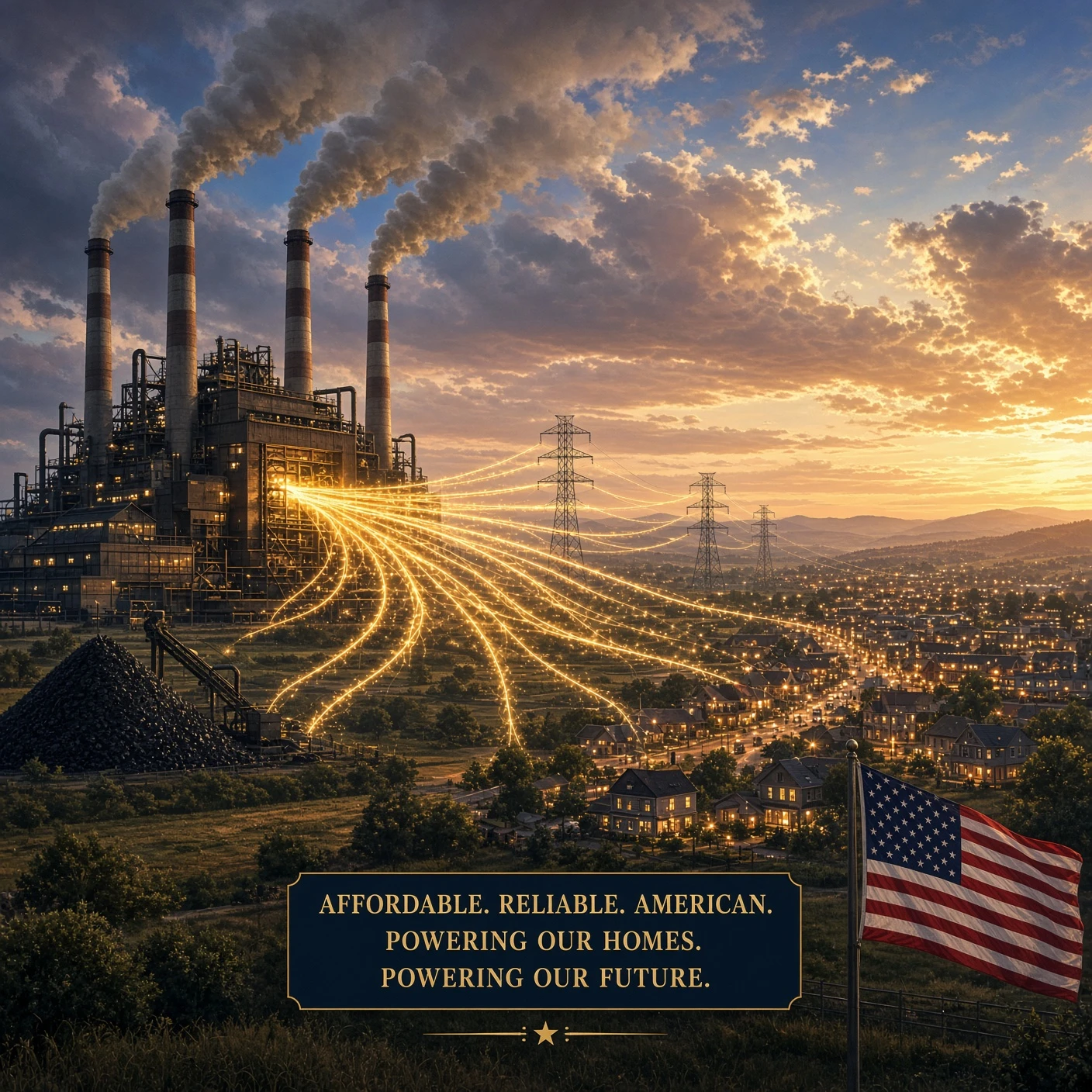
On Monday the Environmental Protection Agency formally withdrew the Biden-era carbon rules that would have forced older coal and gas plants to capture their emissions or close. The largest industrial source of American electricity is no longer required to pretend it can meet a standard written by people who have never stood a night shift in a control room. What the 2024 Carbon Pollution Standards demanded was not a demonstrated technology so much as a political verdict: that plants still keeping the lights on must either invent a commercial-scale capture system on a timetable set in Washington or retire. Administrator Lee Zeldin announced the repeal in Houston as a matter of statutory authority and physical reality. The agency concluded that the rule exceeded the Clean Air Act by treating an inadequately demonstrated control as if it were already a working standard, and projected more than three hundred billion dollars in avoided costs. That is not a footnote. It is the difference between a grid that can meet rising load from industry and data centers and a grid managed as a sermon.
Environmental groups have already filed suit. They always do. The pattern is now a generation old. A regulation is written to force fuel-switching that Congress never authorized; courts later trim it; a successor administration restores the same design under a new name; and the advocacy complex treats any pause as an emergency. The Clean Power Plan was struck down. The 2024 standards revived the same logic. Monday’s action, paired with a proposal to rescind remaining greenhouse-gas findings for the power sector, attempts something more durable than another swing of the pendulum: it asks whether Section 111 was ever a license to close plants by regulation. Critics will answer that the atmosphere is indifferent to legal niceties. The country, however, is not indifferent to capacity. Electrons are not a moral accessory. They are the condition of hospitals, factories, winter heat, and the ordinary evening.
The administration answered that the country needs electrons more than it needs another round of virtue signaling priced in blackouts. That sentence is the whole argument. For fifteen years a war on coal was prosecuted as if reliability were a bargaining chip and as if the rest of the world would freeze its own construction while American plants were retired on paper. China did not freeze. Demand here did not shrink. What changed is that an agency finally admitted a rule written to look like engineering was, in practice, a retirement schedule. Lawsuits will follow, as they always do. The question that will remain after the filings is simpler than the briefs: whether a continental industrial nation will keep baseload generation that actually runs, or whether it will continue to price its own abundance as a moral defect.
Additional ADNN Articles:
Trump Repeals Obama’s Climate Hoax, Reviving Industry Against China
Iran's Stubborn Demands Fortify America's Position as Global Energy Leader
China to Buy US Fossil Fuels as Trump Hails Best Summit Ever
Trump Orders DOJ Probe into Big Oil’s Brazen Driver Gouging

EPA Withdraws Biden Carbon Rules That Forced Plants To Close
EPA Withdraws Biden Carbon Rules That Forced Plants To Close
Court Blocks Mail Ballot Screens as Midterm Ballots Fly Unchecked
Elections Are Fake And Gay!

Trump Calls AI Apocalypse a Hoax, Heralds Golden Age Ahead
Calling Bullshit On The Nerds! And No More Global Resets!





Palantir’s Twenty-Two Points: Hard Power for the Machine Age
Hubris? Or Humility? Humming Away Won't Solve It. Time To Pay The Piper! The Future Is Now!

Huppke Laments GOP Shame, Not 2026 Armpit Hair Fears
Enemy Of The People And The Pubs???