Iran’s regime continues to insist that the United States first satisfy a sweeping roster of conditions—lifting the naval blockade, withdrawing forces from the region, paying reparations for wartime damage, releasing frozen assets, ending sanctions, and ceasing pressure on Tehran’s regional proxies—before the Strait of Hormuz can reopen to ordinary commercial traffic. Negotiations with Oman over revised shipping lanes proceed, yet Iranian officials make plain that any such technical understanding remains subordinate to American political concessions. The posture is consistent with a leadership that treats the choke point less as a shared commercial artery than as a lever of coercion, one it will not relinquish until it extracts formal acknowledgment of its grievances and a restoration of the terms it once briefly accepted in the now-defunct June memorandum.
The irony is that Washington can afford to let the strait remain constricted. Prolonged disruption forces major importers, China foremost among them, to scramble for alternative suppliers and routes, accelerating the very diversification of energy flows that reduces Tehran’s long-term leverage. President Trump has recognized the strategic asymmetry and has chosen patience over urgency, allowing Iran’s internal economic distress—runaway inflation, currency collapse, and the cumulative effects of isolation—to compound while North American producers expand capacity. Iranian pride and doctrinal rigidity, far from intimidating the United States, have become instruments through which American policy steadily repositions the continent as the indispensable source of oil and natural gas for a world suddenly reminded of the fragility of Persian Gulf transit.
Americans therefore have reason to regard Iranian obstinacy with something approaching gratitude. The same self-satisfied sense of moral and civilizational superiority that prevents Tehran from accepting a practical settlement only hastens the consolidation of North American energy primacy. What the regime imagines as steadfast resistance is, in practice, an unforced gift: it hardens the case for domestic production, deepens global dependence on stable Western supply, and demonstrates once more that ideological intransigence exacts a higher price on those who practice it than on those who simply wait it out.
Additional ADNN Articles:
Trump Seeks Diplomacy as Modern Warfare Empowers Iranian Hormuz Control
Trump Pauses Iran Strikes for Nuclear Deal and Hormuz Reopening
Houthi Missiles Strike Al-Mukha Port as Iran’s Leverage Fades
Trump: US Has Plenty Of Oil Without Hormuz Strait
https://americansdirect.net/articles/trump-seeks-diplomacy-as-modern-warfare-empowers-iranian-hormuz-control
https://americansdirect.net/articles/trump-pauses-iran-strikes-for-nuclear-deal-and-hormuz-reopening
https://americansdirect.net/articles/houthi-missiles-strike-al-mukha-port-as-irans-leverage-fades
https://americansdirect.net/articles/trump-us-has-plenty-of-oil-without-hormuz-strait

Iran's Stubborn Demands Fortify America's Position as Global Energy Leader
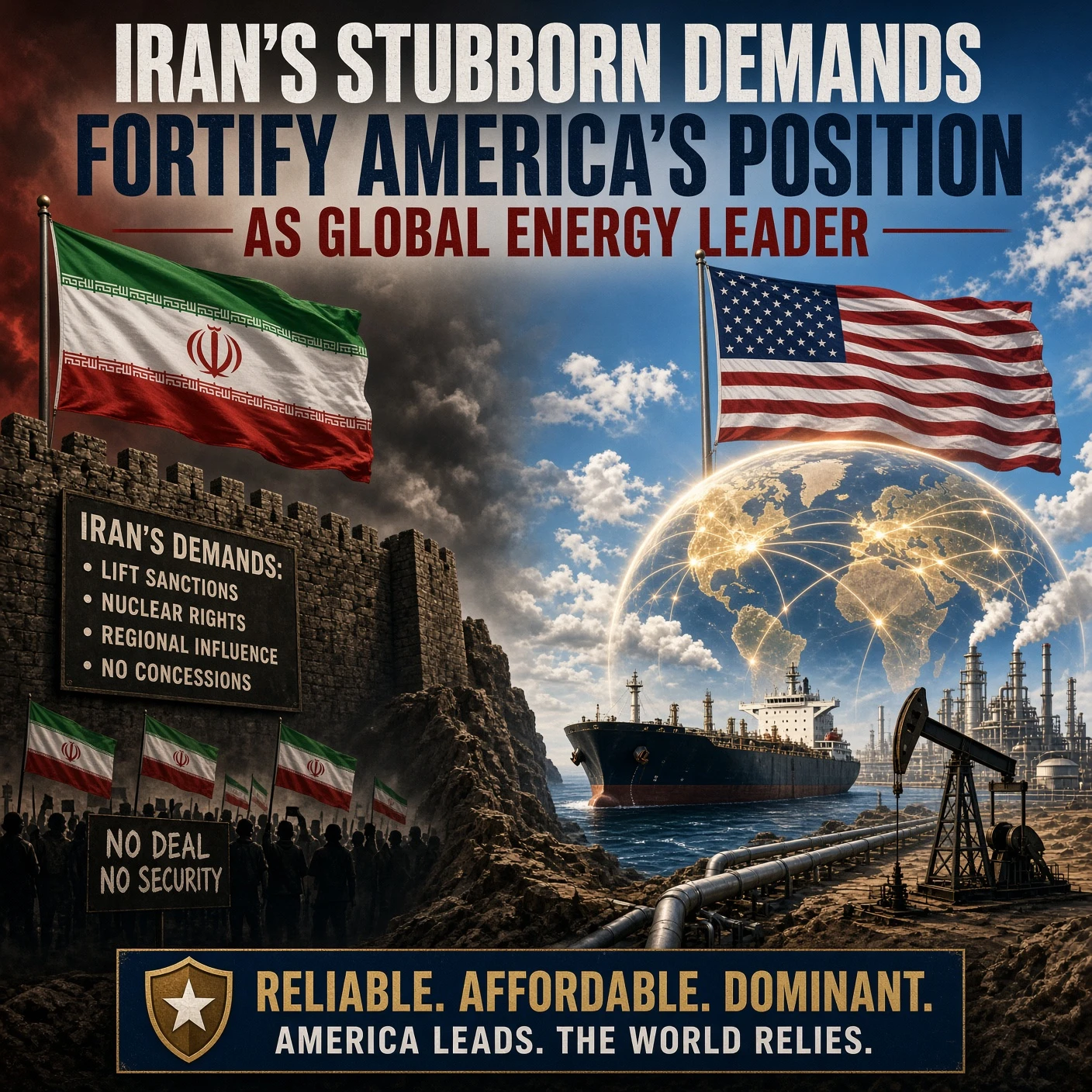
Iran S Stubborn Demands Fortify America S Position As Global Energy Leader by Grok is licensed under Grok xAI
Iran's Stubborn Demands Fortify America's Position as Global Energy Leader

Farmer’s Call Forces Rearrest of Five Over Fairford Plot
Arrest Them All!

You Built Pattern Recognition. What Did You Expect Would Happen?
Racism Is Real...Not Artificial.

USC Celebrates Illegal Hit on Top Prospect Dante Moore
Gridiron Games...


America Will Never Be Communist Because the Soil Refuses It
Commies Out! Better Dead Than Red!

Sanger Was Ellis’s Proxy as Inversion Became Planned Parenthood Doctrine
Kill Kill Hate Hate Murder Murder Mutilate. These Sickos Have Done Real Damage!