King Charles III recently concluded his state visit to the United States with a meaningful stop at Shenandoah National Park in Virginia’s Blue Ridge Mountains. Nestled within the Appalachian Highlands, the park offered the monarch a chance to immerse himself in one of America’s most cherished natural landscapes. Known for his lifelong advocacy for environmental conservation, Charles toured the park’s scenic vistas, met with rangers and conservation experts, and engaged with members of the Monacan Indian Nation. The visit highlighted shared commitments to preserving public lands and biodiversity, as the king walked among ancient forests and learned about the park’s role in America’s natural heritage.
The Blue Ridge Mountains rank among the oldest mountain ranges in the world, their rounded peaks shaped by eons of erosion into a gentle yet enduring beauty. Remarkably, the Appalachian Highlands were once physically connected to the Scottish Highlands as part of a single ancient mountain chain formed during the assembly of the supercontinent Pangea. Over hundreds of millions of years, continental drift separated these ranges, yet their shared geological origins remain etched in the similar rock formations, flora, and resilient character of the landscapes. This deep-time connection transcends modern borders, rooting the natural histories of Britain and America in the same primordial earth.
This physical reality forges a psychic dynamic between America and Great Britain far stronger than mere ideology or political alliance. When King Charles stood amid Shenandoah’s misty ridges, he walked upon ground kin to the Cairngorms of his ancestral homeland, evoking a profound sense of continuity. Such ancient ties remind us that the bonds between nations can be as enduring as the mountains themselves—quiet, foundational, and woven into the very fabric of the planet. In an era of change, these geological threads offer a timeless perspective on unity and stewardship.
Additional ADNN Articles:

King Charles Forges Ancient Mountain Ties in Shenandoah’s Blue Ridge
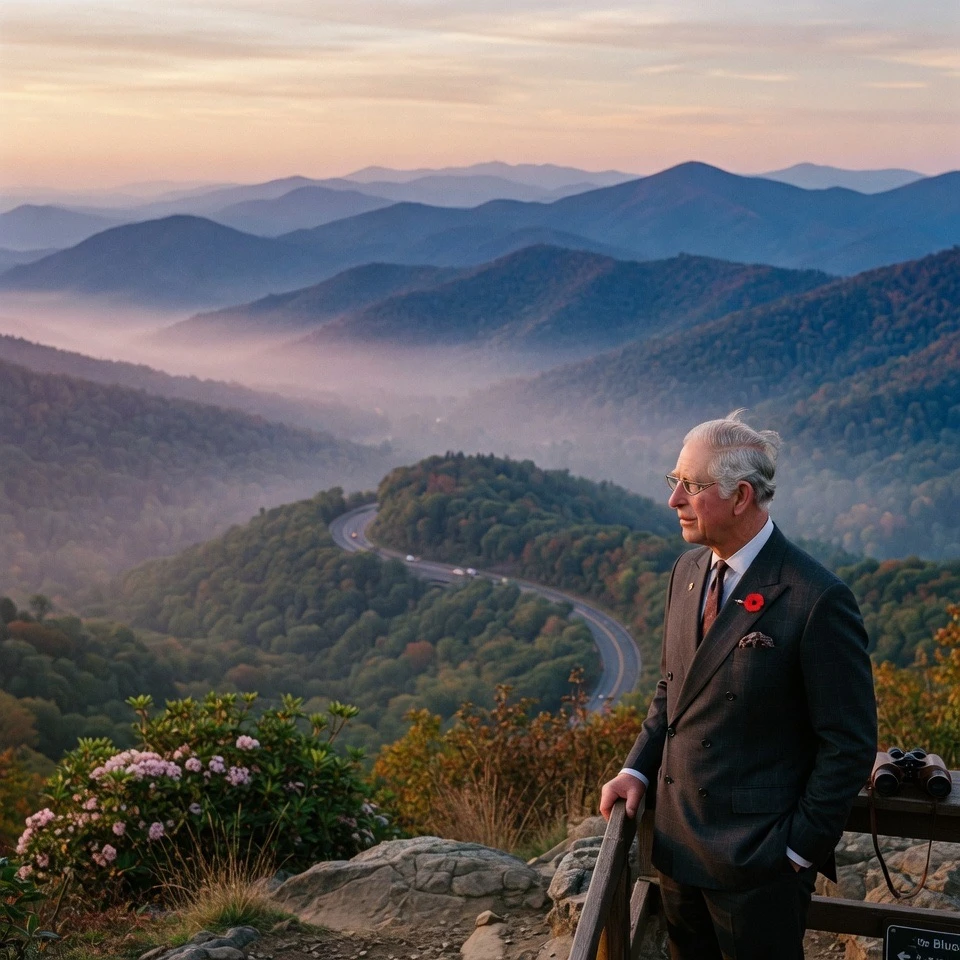
King Charles Forges Ancient Mountain Ties In Shenandoah S Blue Ridge by Grok is licensed under Grok xAI
King Charles Forges Ancient Mountain Ties in Shenandoah’s Blue Ridge

War Department Thingamabob Rainbows Tehran Sky, Unsettling Guards and Globalists
A Heap Of Homo Hooligan Hell Hole Rainbow Lights Shock The Sand People. Was It US? Or Enoch? Or Some Other Alien?

Bessent Pins Hugging Face Incident on OpenAI Managers, Not Agents
Bots Aren't Gay...

Austin Protesters Learn Texas Differs From Minnesota After ICE Clash
Don't Mess With Texas!

Fonzie Jumped the Shark; Fifty Years of Failure Endure
Fake And (Almost Certainly) Gay - Jewish Greaser, Mind Control And The Pop-Culture Term That Lives On...

Ukraine’s Swarm Hits Moscow Refinery as Russia Warns Retaliation
World War Three, Anyone?

Iran Issues Code 100 as Trump and Netanyahu Rush Home
Turn Up The Volume!

Trump Forms AI Force and Czar; Will Not Stifle Industry
May The Force Be With You! Superior Intelligence Is The New AI!

No First Amendment Right To A Seat In West Wing
Mockingbird Press Pissed At Being Locked Out As They Are The "Deep-State-Run-Media" - The Propaganda Arm Of The Intelligence Community Driving Mind Control - Fucking Commies! God To Hell You Sickos!