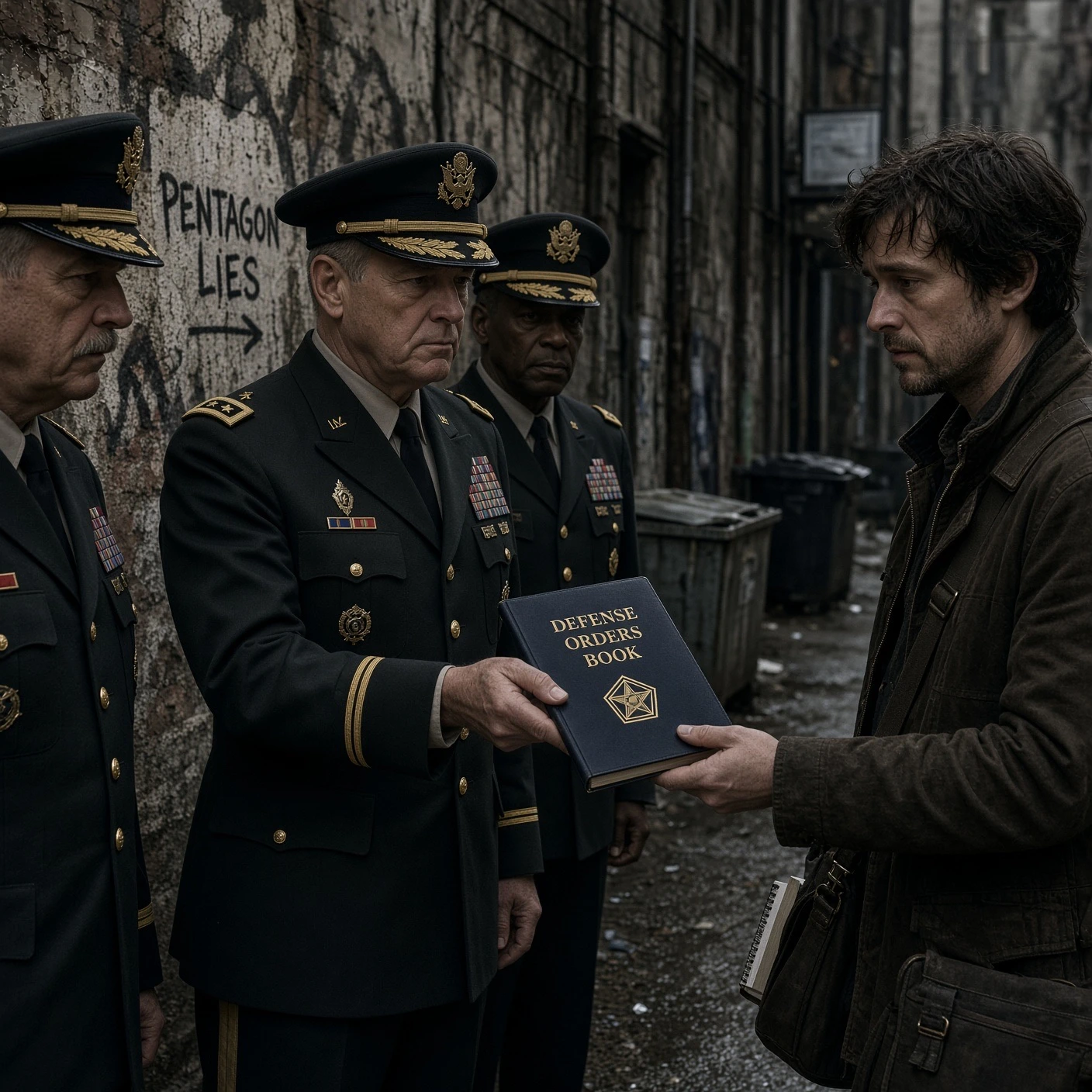
The Washington Post’s Sunday account of the August 14 Secretary of Defense Orders Book was not journalism so much as an instrument. A document produced twice a month for the Secretary of War, listing force availability worldwide, was described to the paper by nameless officers so that a handful of “non-concur” notations could be presented as a revolt against Pete Hegseth. The notations themselves are ordinary staff practice: a commander records disagreement and then executes the order. The leak, by contrast, is not ordinary. It converts internal military advice into a public brief against the administration’s campaign in Iran, timed to suggest that the Secretary of War is deaf to his own generals and that the force is being hollowed out. Sean Parnell called the publication a crime and a betrayal of the force; he added that much of what appeared was inaccurate and that non-concurs arrive constantly. That is how a functioning military works. A newspaper that treats classified staff work as opposition research is not informing the public. It is conducting a smear.
What the Post chose to emphasize was strain: ships and aircraft pulled toward Central Command, European, Pacific, and Southern commanders warning that homeland and theater obligations elsewhere are suffering, some deployments stretched toward 2027. Those are real operational facts. They are also the predictable price of a six-month special military operation against a regime that has spent a generation attacking American interests through proxies, mining chokepoints, and pursuing nuclear weapons. The decision to keep pressure on Tehran is a political one, made by an elected president and executed by a Secretary who has spent his tenure trying to restore a Department of War rather than a Department of Process. To treat every reservation from a four-star as proof of recklessness is to invert the chain of command. Advice is required. Obedience is also required. The leak collapses the distinction so that dissent can be recast as prophecy.
None of this should astonish anyone who has watched the officer corps over decades. Since the 1930s, first through Soviet penetration and later through the long march of ideological fashion through the academies, staff colleges, and promotion boards, parts of the high command have absorbed premises hostile to the use of American power in defense of American interests. Officers who came of age in an institution that prized risk aversion, diversity metrics, and climate briefings over victory will naturally “non-concur” when ordered to sustain a campaign against a revolutionary theocracy. The surprise would be if they did not. Hegseth’s offense, in their eyes and in the Post’s, is that he treats the Iranian operation as a war to be won rather than a problem to be managed until the next administration. The leak is the administrative state’s reply: if you will not govern as we prefer, we will govern you through the front page.
Additonal ADNN Articles:
Hegseth Mandates Audits of Universities’ China Russia Iran Ties
Regime Change Alone Ends Iran’s Nuclear Ambition and Hormuz Threat
Prakash Fake Poll Proved Manufactured Numbers Can Decide Close Contests
Trump Strategies End Forever Wars By Breaking Iran And OPEC

Leaked Defense Orders Book Used to Smear Hegseth on Iran
Leaked Defense Orders Book Used to Smear Hegseth on Iran

Bessent Presses Allies With Tariffs and Iran Isolation in Asheville
We Have The Best Gays...

Haberman Still Relitigates 2016, Asks What If Trump Defies Congress
Trump Broke Her...As He Has Done Many Times!

Musk Declares Physics Played Out as Untestable Theories Hold Spotlight
Here Comes Flat Earth!

Trump Founds Space Academy to Build Colonies Immune to Subversion
Outland! Star Trek! Starship Troopers! Take Your Pick! The Final Frontier...Is Here!

Roman Telescope Rises From Florida to Map Invented Dark Universe
Turn That Weapon Onto Earth And Eliminate Commies! Or At Least Prove Or Disprove Flat Earth!

US Authorities Have All NoBlogs Data; Names Face Federal Prison
The Future...Is Not Bright For These Losers.
Trump Strategies End Forever Wars By Breaking Iran And OPEC
America Alone! Thankfully! When You're The Lone Super Power...You're Never Alone...God Bless America!