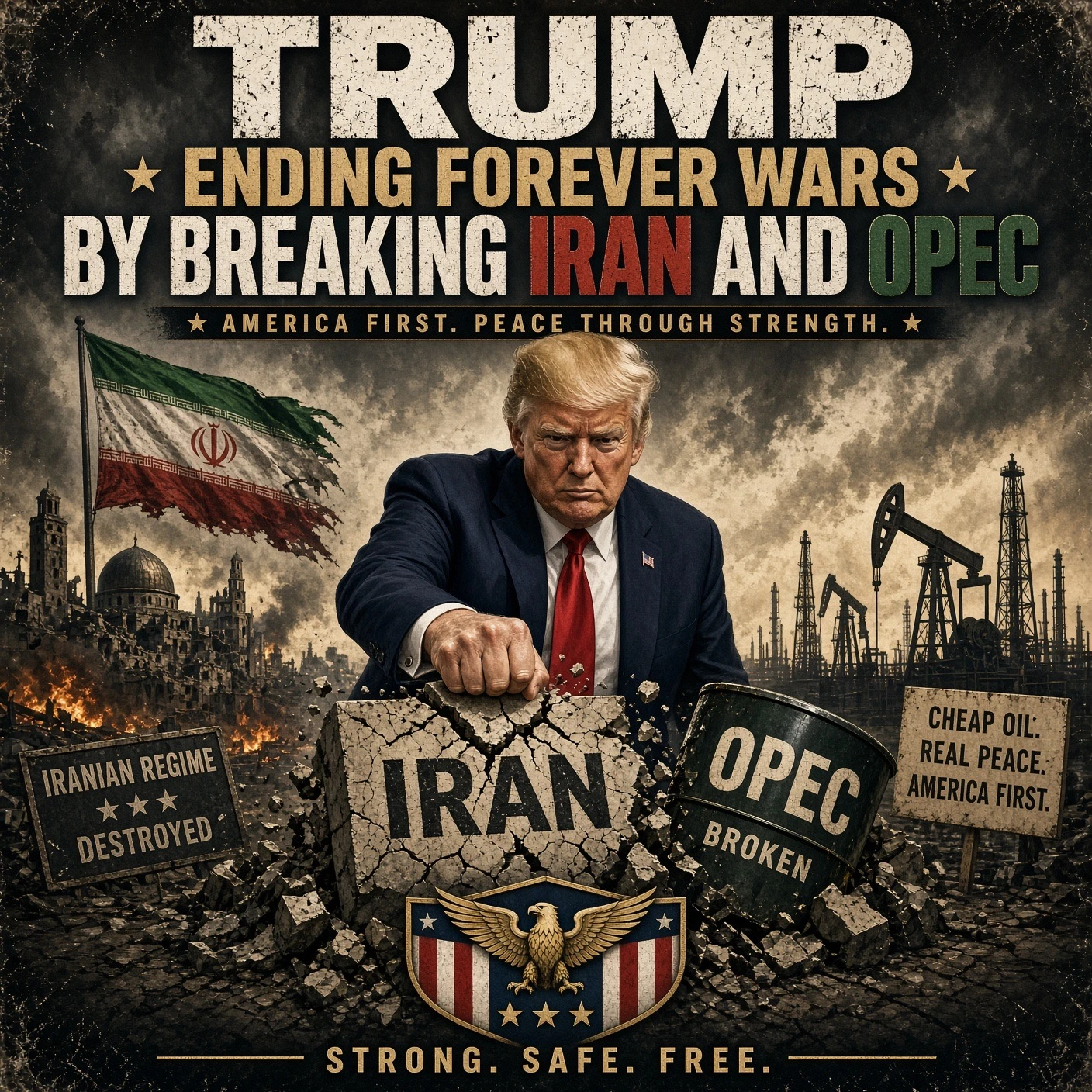
The 33-page National Security Strategy of November 2025 and the 34-page National Defense Strategy issued by the Department of War in January 2026 are not ornamental pamphlets. They are the first official maps of a republic that has decided, after a generation of drift, to stop pretending that every desert, every chokepoint, and every distant quarrel is equally its own. The NSS announces a Trump Corollary to the Monroe Doctrine, restores the Western Hemisphere as the first theater of American interest, and treats Europe’s demographic and civilizational unraveling as a fact rather than a talking point. The NDS translates that judgment into force posture: homeland and hemisphere first, China deterred by strength rather than invited into confrontation, allies compelled to carry their own weight, and the industrial base rebuilt so that the nation can again produce what it must fight with. Both documents treat the Middle East as a region whose historic claim on American blood and treasure has expired—not because the place has become peaceful, but because the United States is again a net energy exporter and no longer lives at the mercy of Persian Gulf tanker schedules.
That withdrawal, however, is not a sentimental retreat. It is a sequence of conditions. Two of them stand out with particular clarity. First, the Iranian regime’s capacity to project power—missiles, proxies, nuclear leverage, and the ability to close the Strait of Hormuz—must be broken so that the region cannot again hold the world economy hostage. Operation Midnight Hammer and the subsequent campaign have already done much of that work; the documents treat Iran as a greatly weakened, though still malignant, actor rather than the central organizing threat of American strategy. Second, the United States must loosen the remaining tether that binds its currency and its energy markets to Arab OPEC discipline. So long as the dollar’s privileged position and the price of gasoline remain hostage to decisions made in Riyadh or Tehran, every American president will be pulled back into the sandbox. Energy abundance at home is necessary but not sufficient; the world’s largest proven reserves sit in Venezuela, long squandered by a hostile regime and courted by extra-hemispheric rivals.
This is why the Venezuelan play is not a sideshow. If American production is unleashed and Venezuelan fields are brought under a durable American-led arrangement, OPEC’s remaining strategic monopoly dissolves. The Middle East recedes from the center of American calculation not because Washington has grown soft, but because it has recovered the material independence that makes distance possible. What is unfolding is the opposite of a new Global War on Terror. It is the methodical dismantling of the premises that made that era inevitable. Those who still call this administration “neoconservative” have not read the documents. They have mistaken the destruction of an adversary’s power-projection for the appetite to occupy his capital. The strategies published in the last twelve months describe something rarer: a great power that intends to leave the desert behind, having first made certain it cannot follow.
Additonal ADNN Articles:
Rial Collapses Past Two Million After America’s Economic Siege
Economic D-Day Exposes Iran-Canada Financial Proxies of Global Control
Trump Declares Economic D-Day Against Iran and Its Enablers
Regime Change Alone Ends Iran’s Nuclear Ambition and Hormuz Threat

Trump Strategies End Forever Wars By Breaking Iran And OPEC
Trump Strategies End Forever Wars By Breaking Iran And OPEC
White House Reveals Middle Class Paid Half Life for Fraudsters
Fraud Is Real! Justice Is Coming...Trust Trump!

Europe’s Women Cradle Dogs Where Their Aborted Children Should Be
European Irony...Can't Live With 'Em, Can't Kill 'Em And Can't Reproduce With 'Em.
Retired Admirals and Bureaucrats Caught Defining When America Is Illegitimate
TDS Is Real! You Know What Else Is Real...Treason & Sedition! Time For Heads To Roll!

Descendants of Redskins Logo Chief Demand Trump Restore the Name
Hail To The Redskins! Hail Trump! Hail Redskin Nation! Heal America!
Trump Defies Captured Senate, Prioritizes Peace and Trade With Russia
Dictate This! Congress Is Feckless, Weak And Whacked! Trump Is In Charge! We Think...Who Knows??? Aliens, Simulation, Fate?
Alberta Remains Canadian, Forcing Full Scale American Invasion and Annexation
The War Of Southern Aggression Is Coming! Prepare Thyself!
Nationalist Compact Replaces Debt Slavery as Senate Fate Decides Shift
Set Yourself Free!
Former CIA Governor Installs Soros Operative in Virginia Congress Seat
White Hats Vs. Black Hats...Spy War Continues. Question Is Who They Really Working For? Time Will Tell!